Gamified Novels are Levelling Up
I’ve recently read about LitRPG (or Literary Role-Playing Game) in The Economist and I instantly fell down a rabbithole. As someone who loves a good choose-your-own-adventure story, the prospect of a gamified novel is far more than just intriguing.
LitRPG weaves the mechanics of video games or tabletop games like Dungeons & Dragons into a novel. The protagonist can see their stats or their character sheets, they can interact with them and they can level up. To readers who are already fluent in video game grammar (XP, levels, loot), this is language they are familiar with, e.g. "he grew stronger through training" vs. "Strength +3, Level Up: 14". And while the reader can track the protagonist’s progress and decision making, there is no interactivity, no decisions, no branching. How disappointing! So why is it so popular? Why do readers describe LitRPG as strangely addictive?
One of the most successful LitRPG novels is the Matt Dinniman’s Dungeon Crawler Carl. My library had 168 digital editions of it, so I did not have to wait a single second before I could borrow it. It follows a protagonist who is forced into a game-like reality controlled by an alien race. Another success is He Who Fights with Monsters, which also features a protagonist transported into a fantastical world, but there is a heavier focus on gamified elements and tournament-style progression.
Many stories follow a similar set-up, where the protagonists is dropped from the mundane, ordinary world into the fantastical and then encounters a guide who teaches them the rules of that new world.
The appeal of LitRPG novels is that the novels don’t just offer escapism, it allows the reader to follow the progress of the protagonist via stats. Everything is quantifiable: intelligence, health, skills. The stats make the protagonist measurable and optimisable, which fits the real world of Oura rings, fitness trackers and sleep apps. The protagonists are not heroes when they starts. It is the ordinariness, the banality of the real world they live in, which is in sharp contrast with the fantasy world they enter. The meaninglessness of the real world is replaced with a quest, a goal, a journey, a defined end point which results in success. But the quantification allows the character to grow within the span of the novel. There is no deus ex machina, no wizard who magically transforms the protagonist in a single sentence. The reader moves at the same emotional pace as the protagonist.
LitRPG sits withing the umbrella genre of Isekai which involved the portal/ transported into another world narratives, and alongside Progression Fantasy, which has the same type of levelling up, but is much less numbers-heavy than LitRPG.
Many titles start online on platforms like Royal Road or Wattpad. They are released one chapter at a time, usually daily or every other day, rather than as a finished manuscript after years of writing. Kindle self-publishing is the default, so the books often don’t exist as physical objects, if a print deal happens at all.
Looking at data in YouScan Social Listening ✨ , you can see that the online conversation is dominated by authors. Only a third are organic word-of-mouth, while about 41% of conversations are authors promoting free downloads, discount bundles and giveaways (and I had already excluded promotions as a category). Writers make up the single most declared occupation in this dataset.
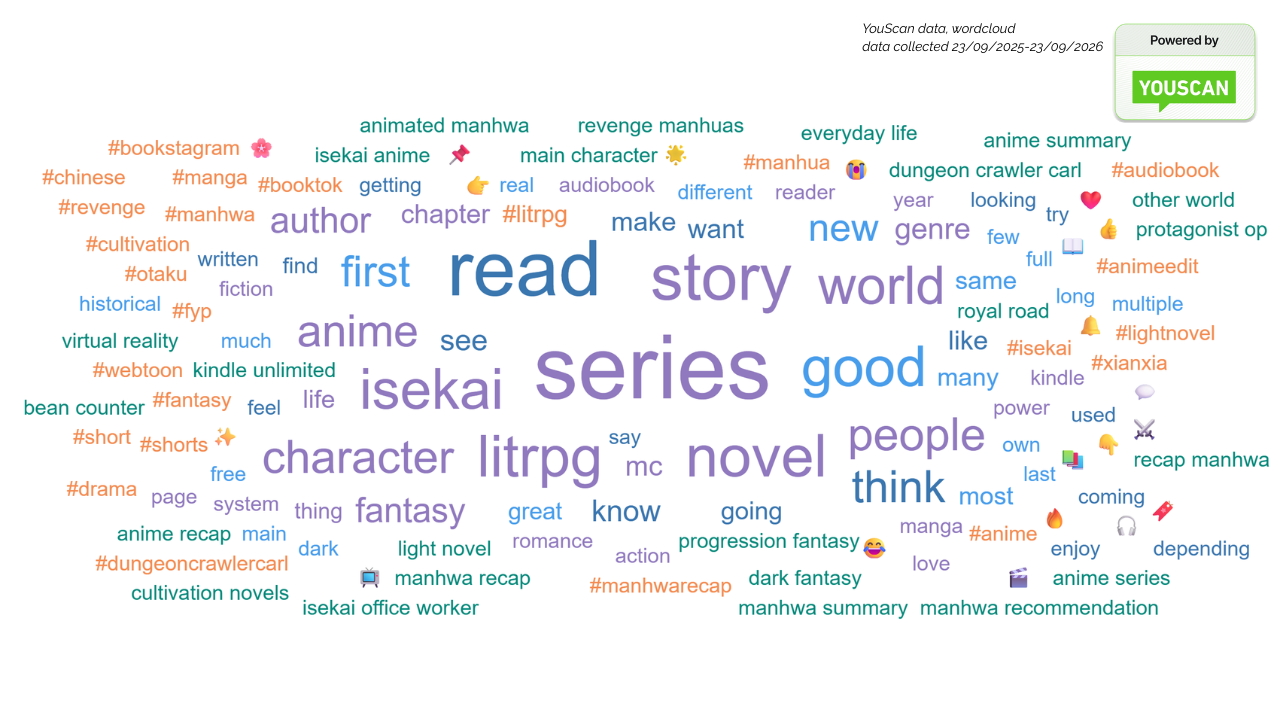
And the community is embedded from the start with discussions on Reddit or Discord, or real-time comments sections attached to chapters. Many authors offer Patreon subscriptions to subsidise their writing and paying subscribers get to read the next chapter ahead of free readers. All of this makes reading LitRPG a social and ongoing activity, rather than an introspective act of reading alone.
And the real-time fan engagement, shaping how the story will continue in the next chapter, daily drops of new chapters, zero gatekeeping – all of this resembles fanfiction culture like AO3. But fanfiction has rarely found its way into the mainstream the way that these gamified novels are doing now. By no means has LitRPG invented reader-shaped fiction, so maybe the difference here is that it managed to tap into fandom engagement, monetised it via Patreon and Kindle, all while sidestepping any copyright infringements by offering original IP.
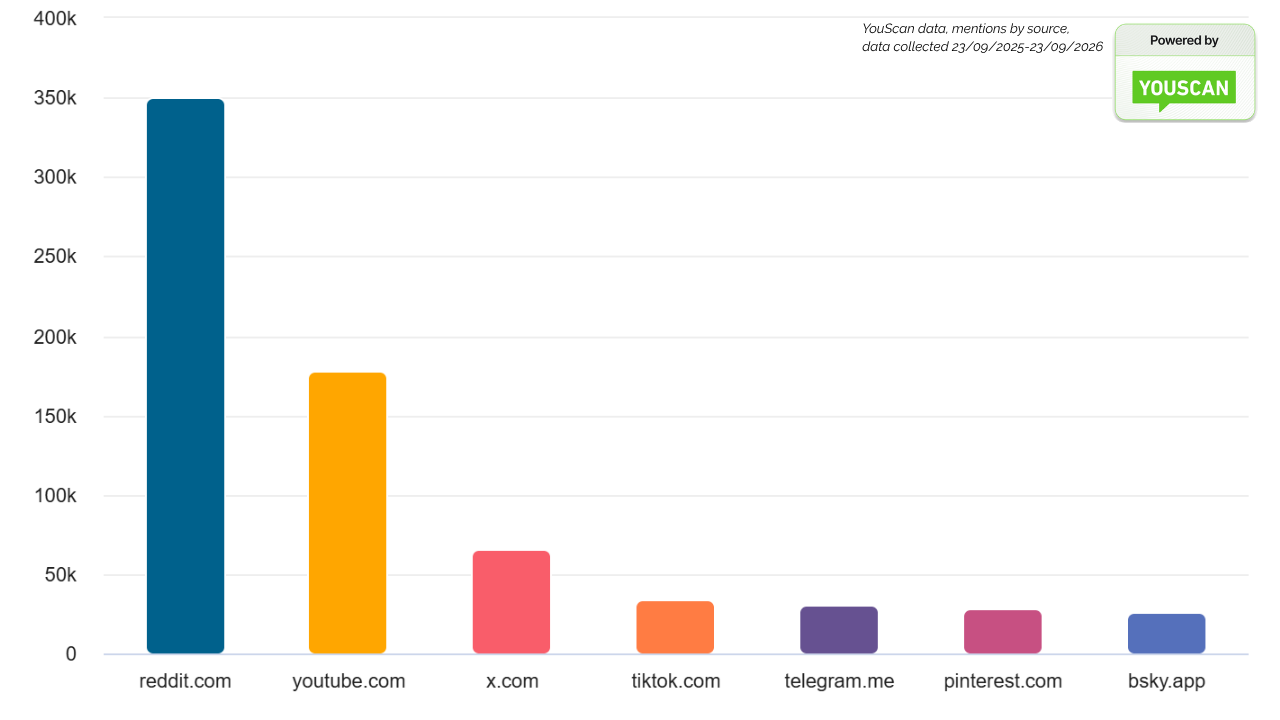
Self-publication + online community engagement means that the stories are not fixed. Online feedback arrives as soon as the author hits the publish button LitRPG authors have rewritten chapters based on readers’ comments. There is a constant negotiation between the author and the reader. The reader is not just interacting with a gamified novel, but also co-authors it, like a live editorial process. And as a number of readers are also Patreon subscribers, they have a financial stake in shaping the next novel. This can read either as democratising the writing process, or diluting it via writing-by-committee. And how it is judged can smack of genre snobbery, a taste hierarchy that determines that this “lowbrow genre” is not going to produce “the next great American novel” (as The Economist put it), rather than seeing it as a literary format of experimentation.
Since many go the self-publishing route, it’s a double-edged sword. Self-publishing removes the barrier to entry, but it also lowers the floor. The LitRPG authors are less constrained by traditional publishing tropes and they can innovate more in the genre, but there is also less quality control via skilled editors.
Tier lists, community rankings and votes are often the main discovery methods for new authors and new work. This way of how the fandom quantifies and organises the genre echoes how protagonists are quantified by stats and levels. But at more than 500 releases per month, the sheer volume of work flooding the market means that the community is less able to surface good work.
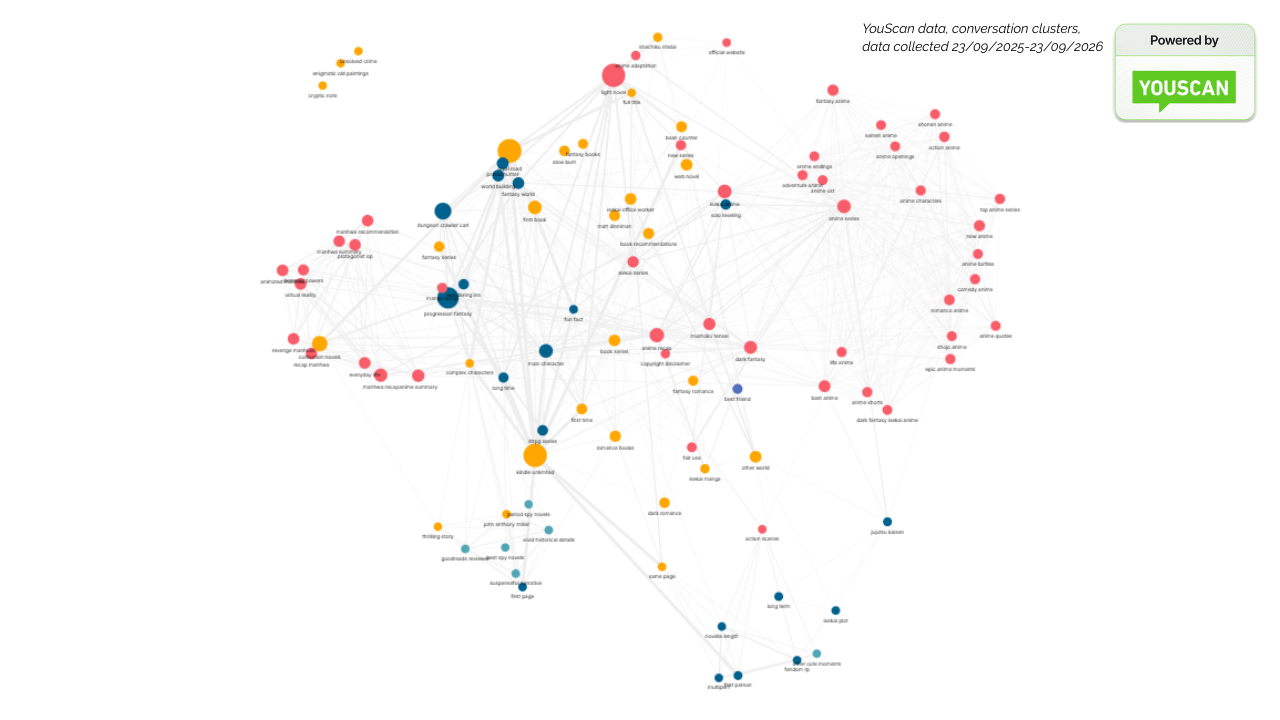
Video game voice-acting has whetted audience appetite for audio version of this content, so audio is often the primary way the novels are consumed, rather than an afterthought. New audio platforms like Voxtome have redesigned the audiobook UX around the specific needs of the genre (e.g. skipping the stats, gamified listening progress. The serialised nature of these novels make it akin to a radio drama or a soap opera. They are essentially designed to accompany repetitive tasks. They are made to survive interruptions with clear progress markers to indicated that the protagonist levelled up. And this is not just a happy accident and devices like cliffhanger chapters and recap-friendly progression makers have become expected parts of the format. So both the story format and the publishing model keep their readers hooked by offering small, regular rewards.
So once I manage to crawl out of this rabbithole, I started to understand why this is so addicting. The rules are clear. Effort leads to reward. Every stat, every level, every chapter, every Patreon tier – all of them are small, satisfying hits that are stacked up so often that you expect them and stop noticing that it’s a formula.