Trends & Artefacts: carspreading edition
In this week’s edition of Trends & Artefacts, we round up the snackable trends, stats and insights from around the world, including:
Younger Crowds Fill Art House Cinemas
Bleak Week Builds A Festival On Sadness
Cars Are Getting Older, Not Newer
Explainer: carspreading
Tech Demand Drove Car Prices Up

Younger Crowds Fill Art House Cinemas
A new Art House Convergence survey shows independent cinemas grew 9% in 2025, with a quarter of surveyed moviegoers having discovered their favourite art house within the last three years, at an average age of 40. Over 70% call these venues essential to their quality of life, valuing community and curation over convenience. When a younger crowd chooses the art house over the multiplex, what does that reveal about what cinema is actually for now?

Bleak Week Builds A Festival On Sadness
American Cinematheque's Bleak Week is a film festival built entirely around difficult, hopeless stories, the opposite of the feel-good arcs streaming platforms usually chase. In just five years it's grown from one LA cinema to 100 theatres across eight countries, screening 300-plus films with directors like Denis Villeneuve and Ari Aster showing up. When grief and despair sell out screens faster than comfort does, what does that say about what audiences actually want from culture right now?
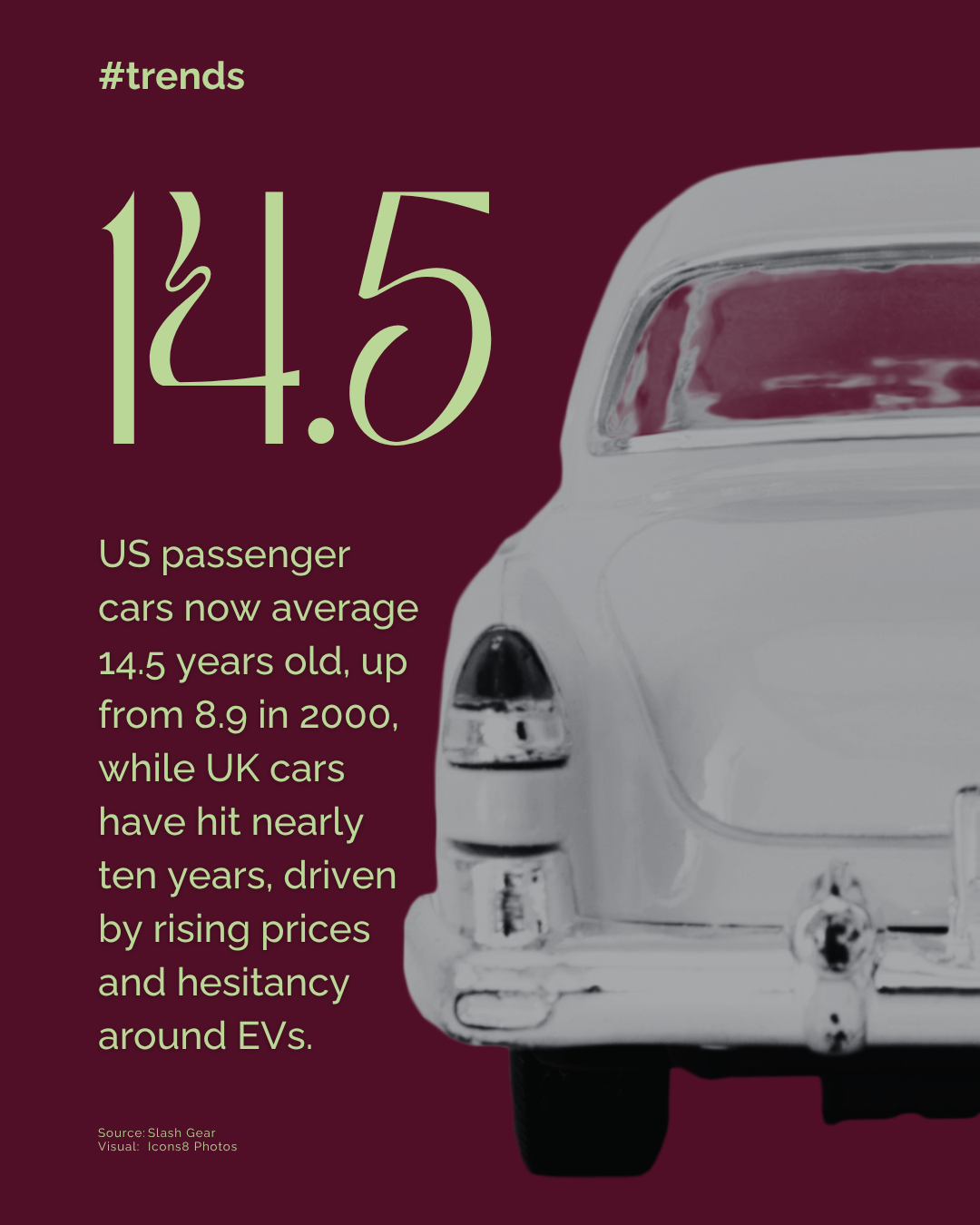
Cars Are Getting Older, Not Newer
US passenger cars now average 14.5 years old, up from 8.9 in 2000, while UK cars have hit nearly ten years, driven by rising prices and hesitancy around EVs. Automakers are responding with longer warranties, heritage parts programmes like Honda's, and even a return to physical buttons over touchscreens. When staying loyal to an old car becomes the norm, what does that mean for brands built around the upgrade cycle?
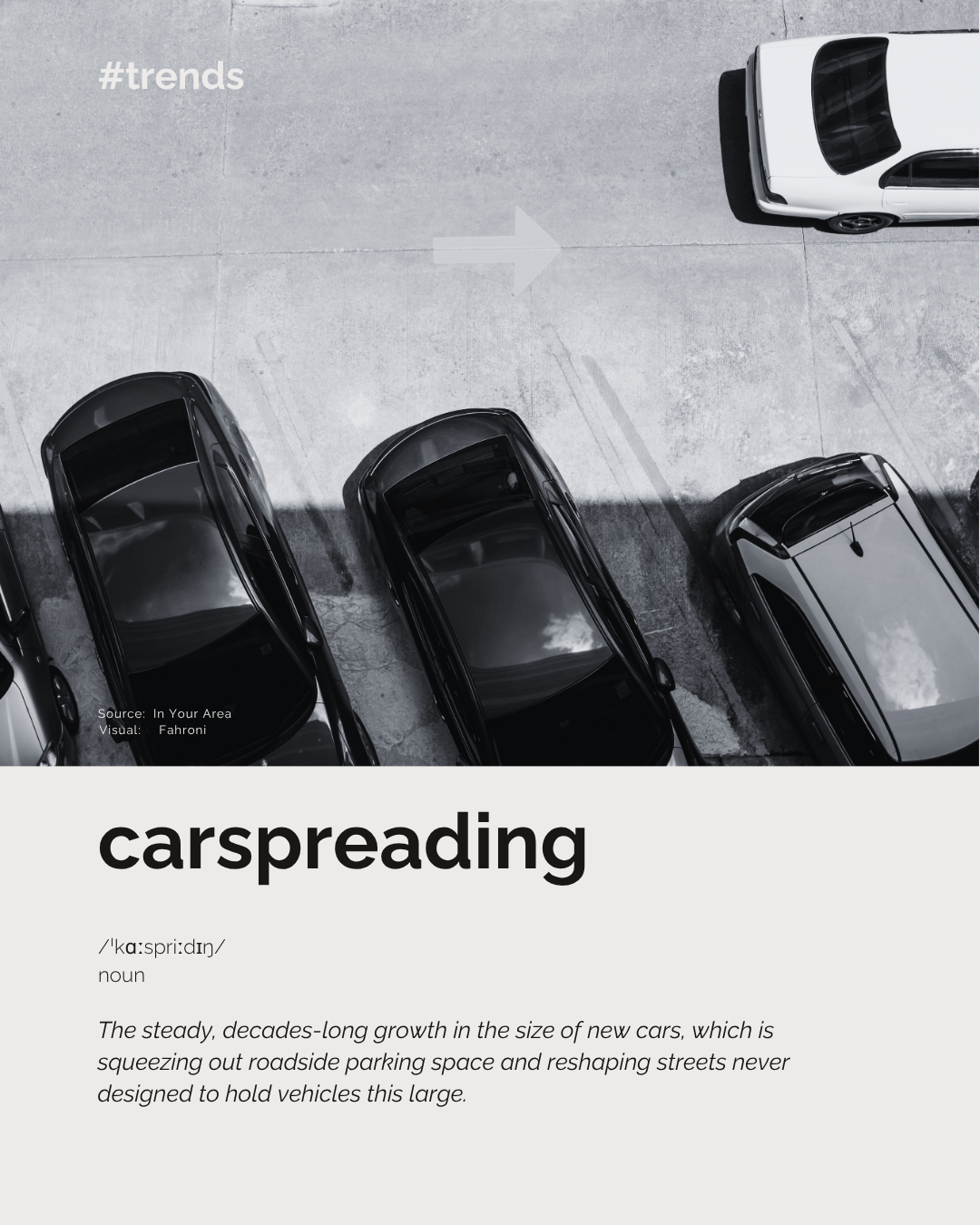
Explainer: carspreading
New research from Transport & Environment shows cars have grown roughly 1.2cm longer and 0.5cm wider and taller each year since 2000, a trend that could wipe out 14% of on-street parking in some cities by 2040, London alone losing 100,000 spaces. The same report links bigger SUVs to an estimated 400 extra road deaths a year by 2040. When "carspreading" reshapes streets faster than policy can respond, who's actually deciding what our cities look like?
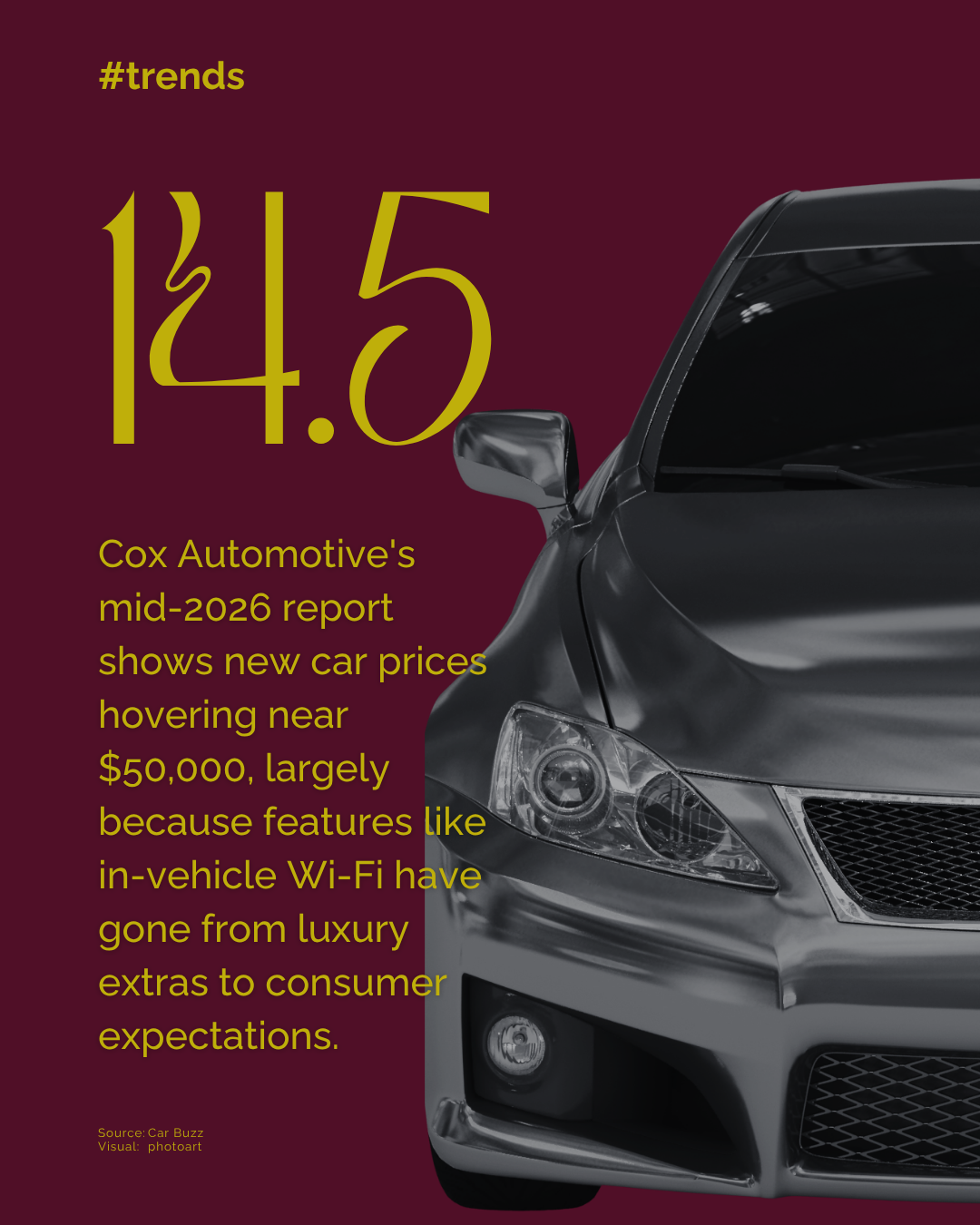
Tech Demand Drove Car Prices Up
Cox Automotive's mid-2026 report shows new car prices hovering near $50,000, largely because features like automatic emergency braking, lane departure warning and in-vehicle Wi-Fi have gone from luxury extras to consumer expectations. Now automakers are eyeing subscription fees for things like remote start and CarPlay, even though only 45% of drivers say they'd actually pay for CarPlay separately. When people demand the tech but resist the bill for it, who ends up absorbing the gap?