Trend Taster: luxury shame edition
In this week’s edition of the Trend Taster, we round up the snackable trends, stats and insights from around the world, including:
Are loyalty programmes valued?
Declining celeb influence
Luxury shame
Champagne sales drop
Luxury hospitality market
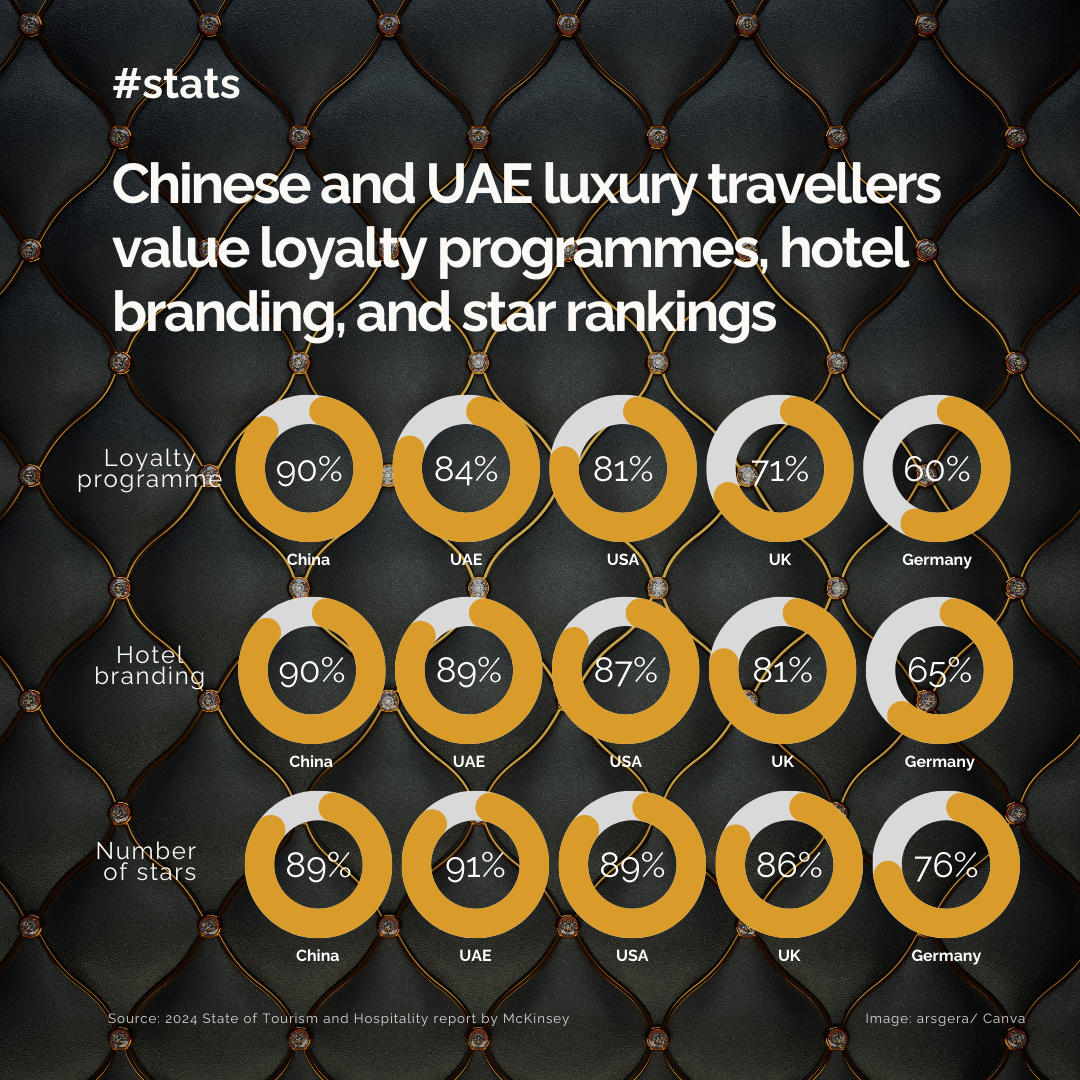
Are loyalty programmes valued?
A comparison of luxury travellers across regions reveals that star rankings are consistently important. However, travellers from China and the United Arab Emirates tend to place higher value on brands and loyalty programmes compared to those from other regions. This trend may be influenced by the local luxury accommodation landscape, particularly in China where branded hotels with loyalty schemes dominate the market. The continued development of China's domestic hotel supply, with an increasing prevalence of chain establishments, could potentially reinforce the significance of branding and loyalty in this market.
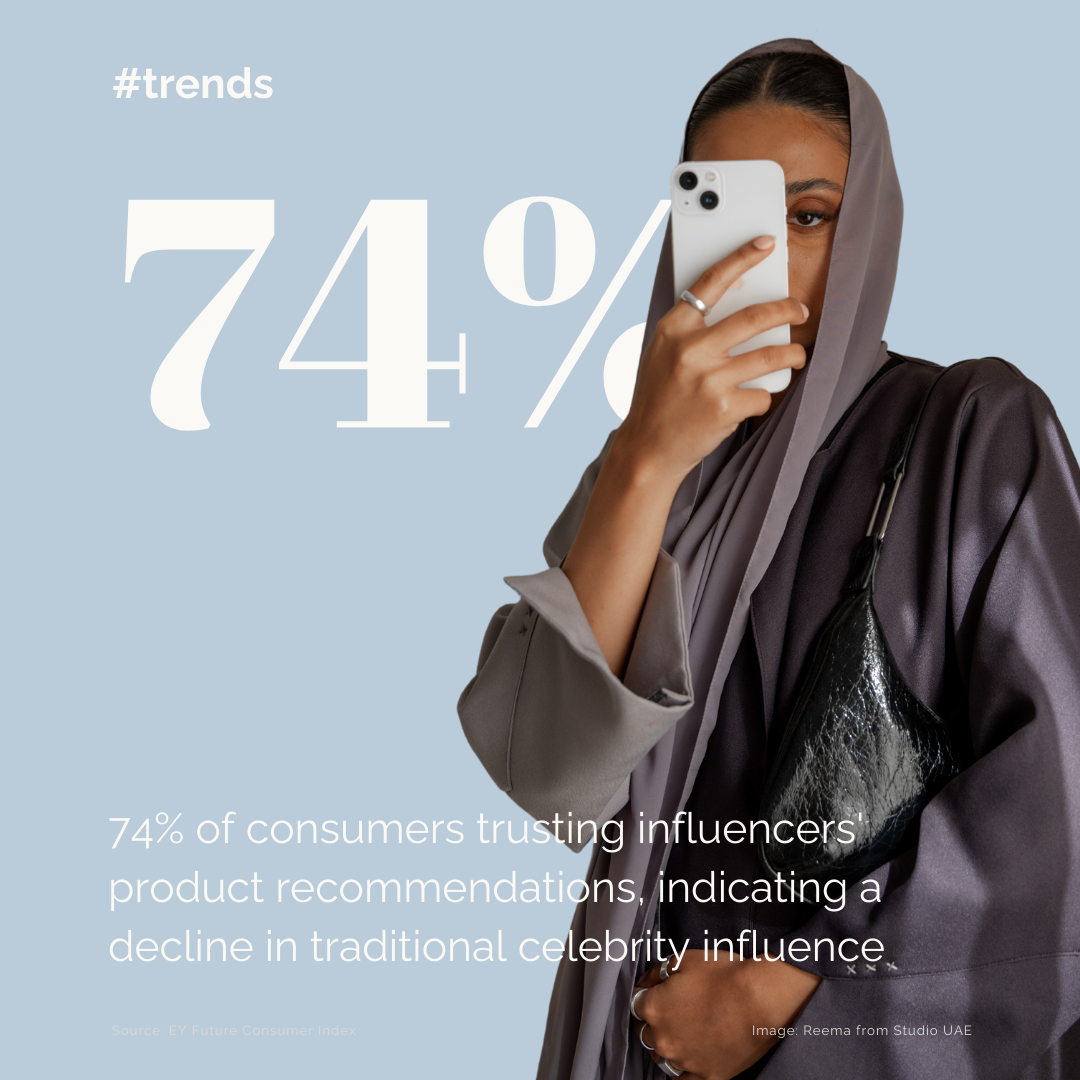
Declining celeb influence
The latest EY Future Consumer Index reveals that influencers have a particularly strong impact on younger consumers, with 66% of Millennials and Gen Z following them, compared to 27% of older generations. The study found that only 25% of consumers follow individuals solely for their fame, 49% consider influencer content valuable, and 42% find it relatable. This is leading to 74% of consumers trusting influencers' product recommendations. This trend highlights the need for brands to adapt their marketing strategies to remain relevant to future consumers, while also indicating a decline in traditional celebrity influence due to their less relatable lifestyles, especially during challenging economic times.
Luxury shame
The global luxury market remained stable amid geopolitical and economic challenges in 2023, surpassing €1.5 trillion. Although the first quarter of 2024 saw a slowdown in most regions due to macroeconomic pressures, Japan's market thrived thanks to a tourism boom. Meanwhile, China's market faces challenges from the revival of outbound tourism and weakening local demand, as wealthy shoppers are spending more abroad. This economic uncertainty has made middle-class shoppers more cautious, resulting in "luxury shame" as a shift away from ostentatious items.
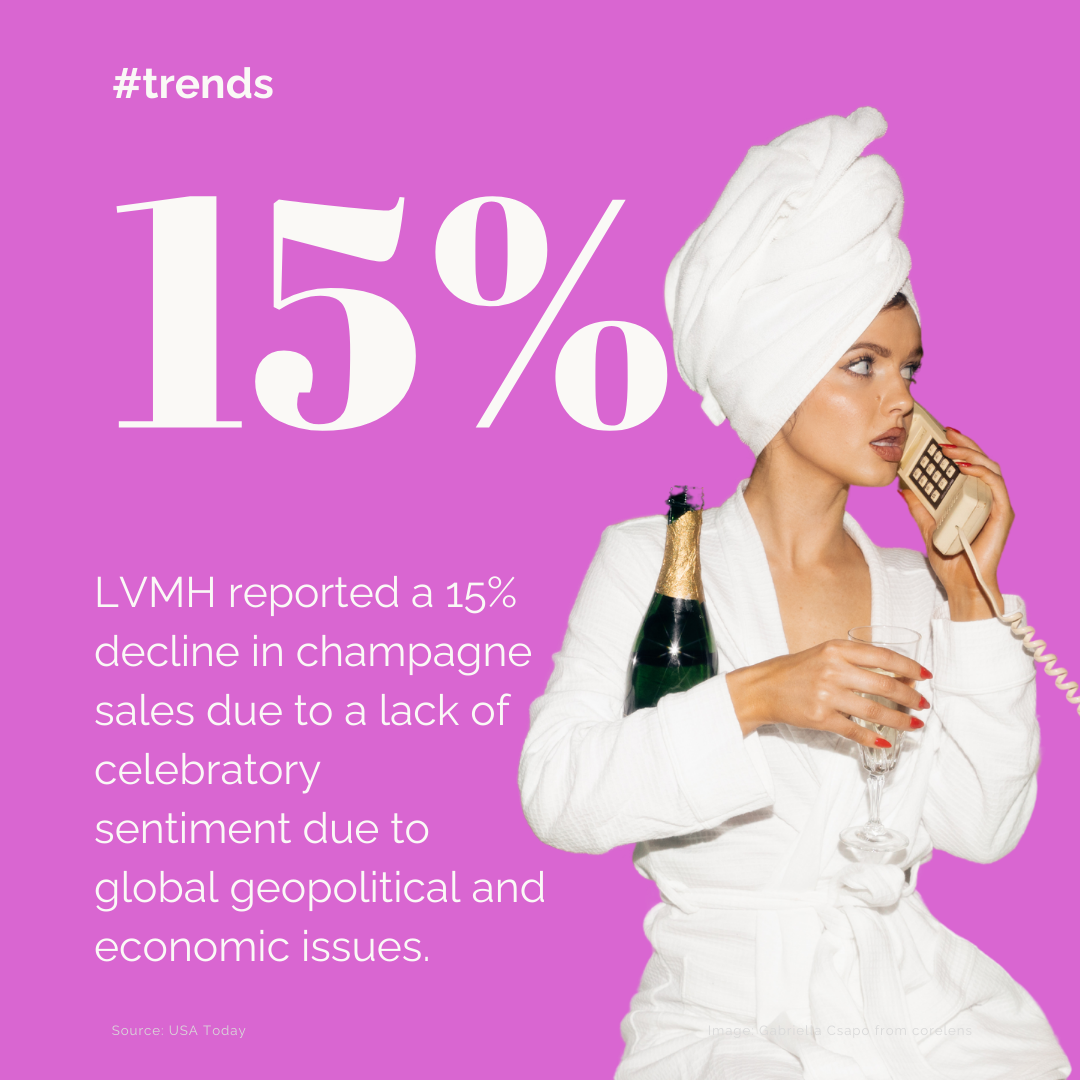
Champagne sales drop
LVMH, the parent company of brands like Dior and Tiffany & Co., reported a 15% decline in champagne sales in the first half of the year compared to the previous year. Executives attribute this to a lack of celebratory sentiment due to global geopolitical and economic issues. Despite the decline, champagne volumes remain above pre-pandemic levels. Still and sparkling wine sales rose by 16% in the first half of the year, but total revenue from Champagne and wines dropped by 12%.
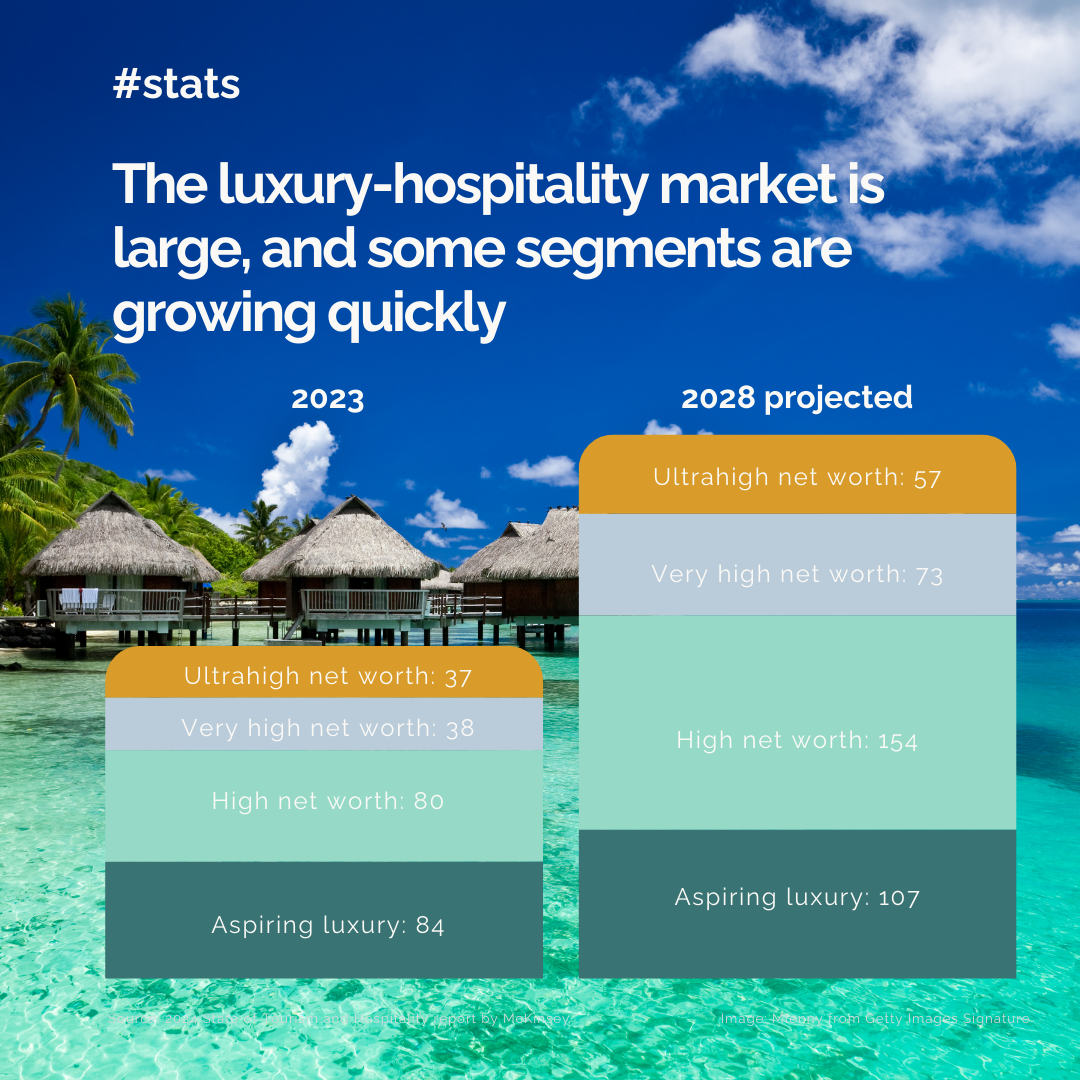
Luxury hospitality market
The luxury tourism market is expanding rapidly, driven not only by high-net-worth individuals but also by a growing segment of 'aspiring luxury' travellers with more modest wealth, who are increasingly willing to allocate a larger portion of their income to upscale travel experiences.