Coffee is an acquired taste. My partner does not drink any. I need it just to function. To him, coffee is just bitter. To me, it is the caffeine boost I need and an essential part of my daily routine. I used to drink black filter coffee by the pot. Nowadays, I cannot stomach more than two cups, spread evenly across my day. Diluted heavily with milk and sweetened lightly with coffee syrup, trying to distract my delicate stomach from the fact that I just had a double espresso underneath all that sugar and spice. At least until that caffeine starts working.
I can see you raising an eyebrow: “That’s not a coffee, that’s a milkshake!”. And I would agree with you. It’s a coffee-flavoured milkshake. But it did its job, keeping me awake and my brain functioning well enough to write this article. And I’m not the only one who prefers to drink coffee-flavoured milkshakes. A 2026 Drive Research survey of 1,000 US coffee drinkers found that 41% prefer sweetened coffee: sugar, sweetener, honey, syrups. And it is not just for the sweetness. It is the vanilla, the caramel or the pumpkin spice that can turn a plain latte into a small reward.
In the monoculture of the mid-2000s, the pumpkin spice latte owned the autumn. Its annual return offered a shared ritual; a cosy drink for a cosy time of year. In 2026, the seasonal menu is crowded. Pumpkin spice is still there but it is now one of many limited-edition flavours. Alongside the popular and obvious vanilla and caramel, there is a plethora of options for you to assemble your own concoction of sugary flavours.
Coffee's taste cultures are not judged equally. A drinker who can describe origin, process or precise measurements could be called a connoisseur. Someone who orders syrup could be considered to have a childish taste. The difference is partly in the language available to describe it: technical knowledge gives one kind of pleasure prestige, while "I like how it tastes" can sound like an apology.
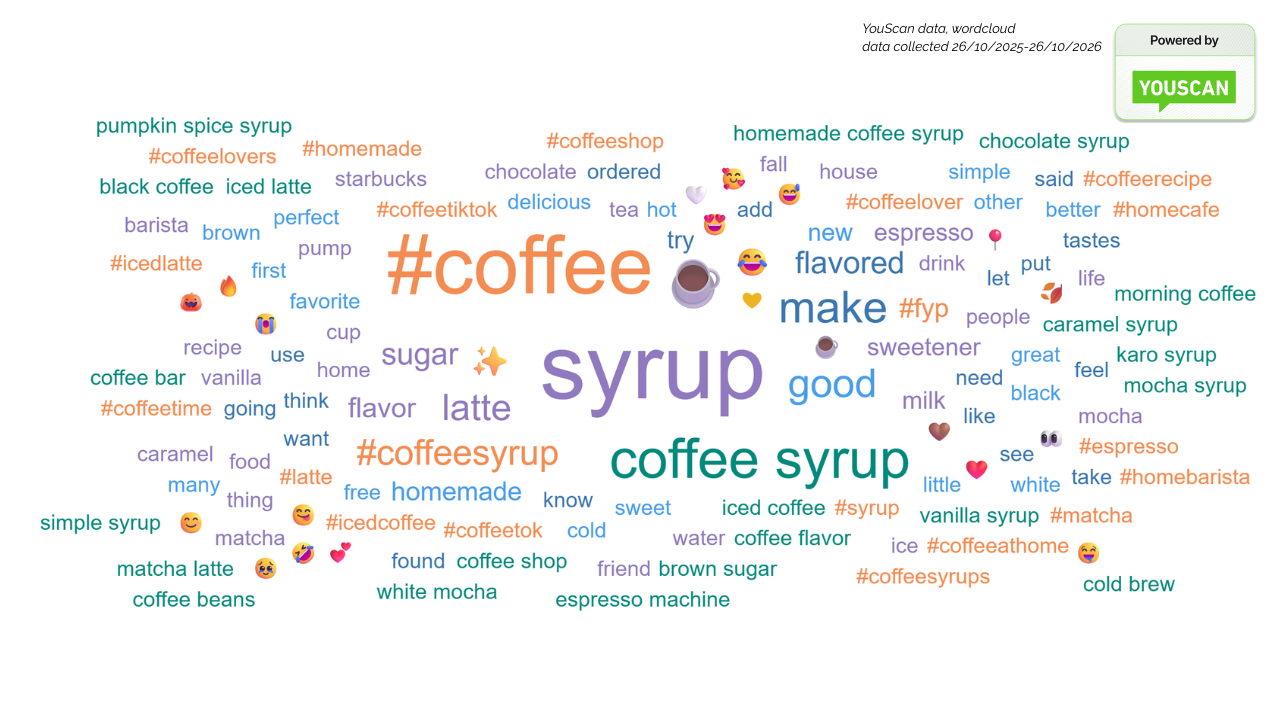
And syrups are no longer limited to just coffee. They are now standard for every high street coffee shop, whether they sell coffee, matcha or bubble tea. Once a flavour can easily move between different types of drinks, it becomes less a defining feature of coffee than a technique for making a beverage feel special. The question is no longer only what you drink, but how you customise it.
But flavour feels increasingly like a supporting character. These drinks are designed to be seen. Bright colours, layers, foam and a memorable name make a drink easy to photograph and post to be liked and commented on. The image extends the experience beyond the first sip; the drink becomes something to choose, display and talk about.
Matcha reveals how much context shapes judgement. It can be sweet and photogenic, but it often carries associations with wellness, mindfulness and ritual. That halo can make a flavoured drink seem respectable in a way that the syrup-heavy coffee does not. The colours and textures matter too. An attractive drink can be both tasty and visually persuasive. We do not only consume the beverage; we consume the story that accompanies it.
In 2022, a pump of syrup was reported to add about 50 pence, according to Matthew Algie. That is roughly equivalent to the increase in the price of a latte over a three-year period. This makes it worth it for shops: charge a premium for a couple of pumps, and suddenly coffee or matcha becomes palatable to people who would not usually order either.
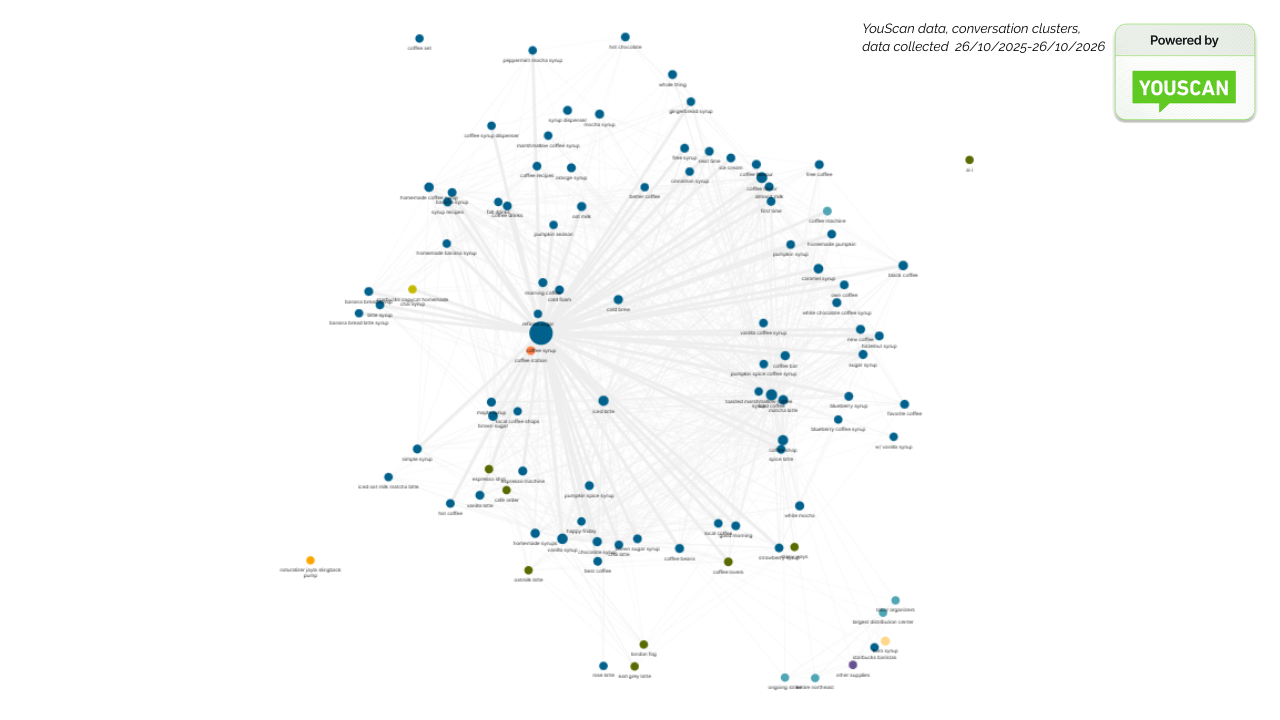
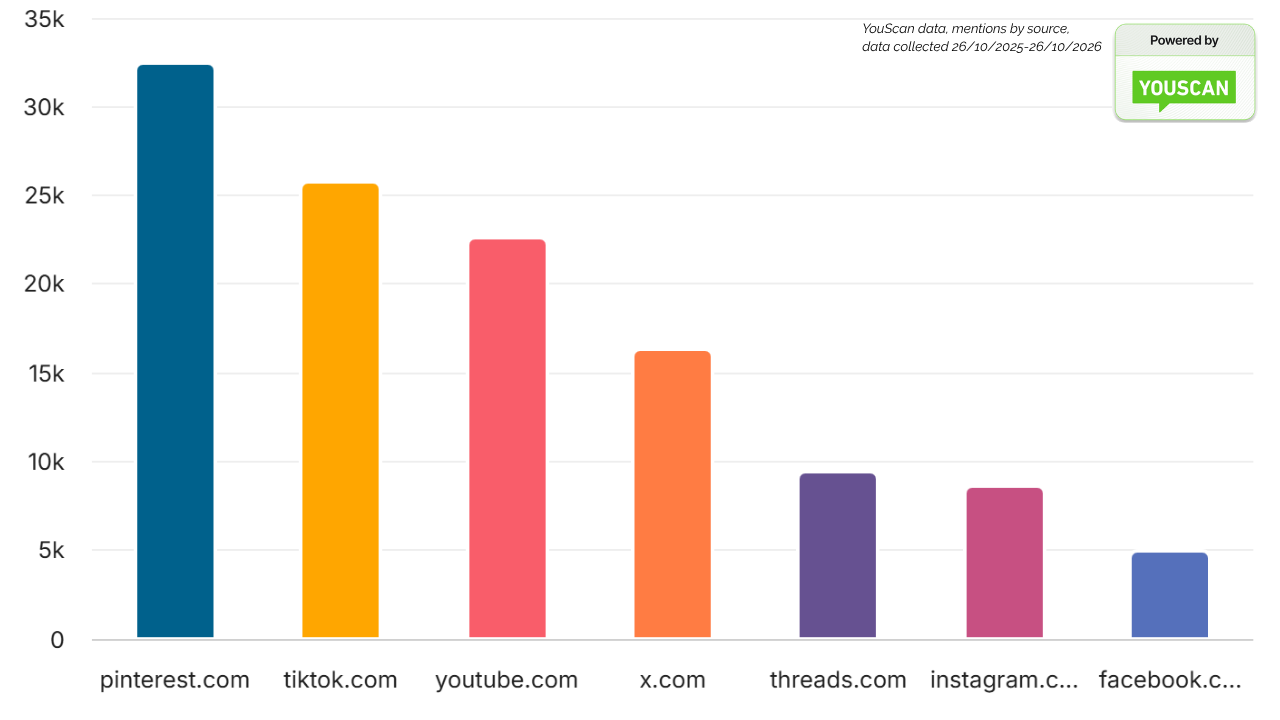
Rising café prices help explain why the ritual is moving indoors, but the home version is not simply a cheaper copy. YouScan's social listening data across the past 12 months tracked an unexpected talking point in the online conversations: people are sharing recipes for how to make syrups from scratch, rather than buying them. The motivations are more than just costs. People are trying to avoid commercial fillers, artificial additives and preservatives in favour of clean pantry ingredients. They wanted control over sweetness, or they need recipes that were keto, zero-sugar or refined-sugar-free. And many described the process itself as part of the reward: a mini ritual of simmering spices and sugar that fills the kitchen with autumn smells before the coffee is even poured. Instead of paying for a bottle, they decide what goes into the bottle.
However, the café still offers something a kitchen cannot. It’s one of the few public places where solitude can look purposeful: a reader alone with a book, a freelancer with a laptop, a people-watcher with a latte (I call it research). As more people make their elaborate drinks at home instead, those rituals move indoors. But the café holds its ground as a third space. Somewhere that is neither home nor work. Somewhere where being alone or being together look like a reasonable way to spend an hour.
But black coffee has not vanished. The Drive Research survey found that 24% prefer black coffee, which is up from 18% in 2024. The sheer choice paralysis of limited-edition lattes, cappuccinos and macchiatos makes some people yearn for just a cup of coffee.
Constant novelty has a cost. A treat feels special because it is occasional. If every week brings a new limited-edition flavour, the special thing becomes the default. Coffee syrups sell sweetness, certainly. They also sell the feeling of an occasion: a small break in the ordinary, whether it happens in a café or at home. But when every drink can be made into a treat, what does "treat" mean anymore?