What is trendjacking?

Igor Omilaev/ Unsplash
Ever felt like you're always playing catch-up with the latest trends? Well, buckle up because we're about to dive into the world of trendjacking - a strategy that might just be your ticket to riding the wave of viral sensations and cultural moments.
So, what exactly is trendjacking?
Trendjacking is the practice of aligning your brand or marketing efforts with current trends, popular topics, or viral events to boost visibility and engagement. It's about being quick on your feet, spotting opportunities, and cleverly inserting your brand into the conversation that everyone's already having.
What are the benefits of trendjacking:
Trendjacking offers several key benefits for marketers and brands. By aligning with current trends and popular topics, companies can significantly boost their visibility, reaching a much wider audience than they might through traditional methods. This approach also tends to enhance engagement, as people are naturally drawn to content that feels timely and relevant. Trendjacking is often a cost-effective marketing strategy, requiring minimal resources while potentially yielding high returns. It's an excellent way to demonstrate brand relevance, showing that your company is in tune with popular culture and current events. Perhaps most excitingly, when executed well, trendjacking has the potential for virality, allowing your content to spread rapidly across social media platforms and exponentially increase your reach. These combined advantages make trendjacking a powerful tool in the modern marketer's arsenal.
What can trendjacking be used for?
Product Launches:
Timing a product release to coincide with a trending topic or event
Creating limited edition products inspired by current trends
Using trending hashtags or memes to introduce new products
Social Media Campaigns:
Creating content that ties your brand to popular hashtags
Participating in viral challenges relevant to your brand
Responding to trending news or events with brand-relevant content
Content Marketing:
Writing blog posts or articles that connect trending topics to your industry
Creating infographics that explain or visualize current trends
Producing videos that parody or reference popular culture
PR Stunts:
Organizing events that capitalize on current trends
Making newsworthy announcements that align with trending topics
Partnering with influencers or celebrities associated with current trends
Advertising Campaigns:
Adapting ad copy to reference current events or pop culture
Creating ads that play on trending memes or viral content
Adjusting ad visuals to reflect current aesthetic trends
Now, let's look at some examples of trendjacking in action:
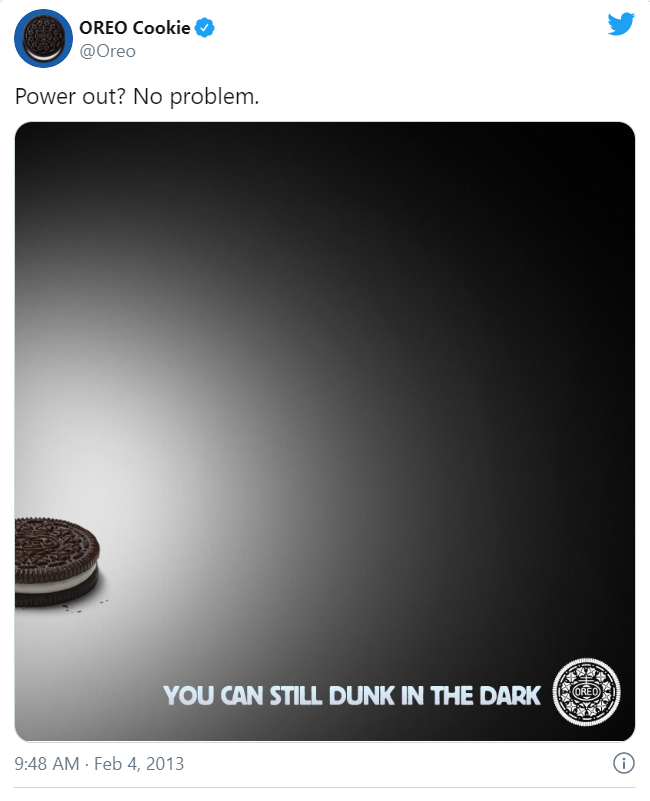
Oreo's "Dunk in the Dark" tweet during the 2013 Super Bowl blackout
The Oreo "Dunk in the Dark" tweet is a classic example of successful real-time marketing and trendjacking. During the 2013 Super Bowl, an unexpected power outage plunged the New Orleans Superdome into darkness for 34 minutes. Oreo's social media team, already on standby for the big game, quickly seized this moment. They tweeted a simple image of an Oreo cookie against a dark background with the caption "You can still dunk in the dark." This clever, timely response to the blackout immediately went viral, garnering thousands of retweets and likes within minutes. The tweet demonstrated Oreo's agility, creativity, and ability to capitalize on a trending moment, all while staying true to their brand identity. It's often cited as a benchmark for successful real-time marketing, showing how a brand can insert itself into a conversation naturally and memorably, even during an unexpected event.

Airbnb's recreation of Van Gogh's bedroom for rent during a museum exhibition
Airbnb's recreation of Van Gogh's bedroom is a prime example of creative trendjacking in action. In 2016, during the Art Institute of Chicago's exhibition of Van Gogh's paintings, Airbnb partnered with the museum to create a full-scale, three-dimensional replica of the artist's famous "Bedroom in Arles" painting. This unique room was then listed on Airbnb for just $10 per night, allowing art enthusiasts to literally step into Van Gogh's world. The campaign brilliantly merged art, tourism, and technology, generating massive media coverage and social media buzz while showcasing Airbnb's innovative approach to experiential marketing.

IKEA's "Game of Thrones" cape instructions after a character wore a similar fur
IKEA's "Game of Thrones" cape instructions showcased the brand's quick wit and ability to capitalize on pop culture moments. In 2017, after it was revealed that some of the show's costumes used IKEA rugs as capes, the Swedish furniture giant responded with a clever marketing move. They released a set of mock assembly instructions titled "VINTER," mimicking their iconic style guide. The instructions humorously detailed how to turn an IKEA SKOLD sheepskin rug into a Jon Snow-style cape. This playful response not only entertained fans of both the show and the brand but also demonstrated IKEA's ability to join trending conversations in a relevant, on-brand manner, earning widespread media coverage and social media engagement.

Decathlon’s response to the Windows outage
Decathlon responded to a major global IT outage with a timely marketing campaign in Canada. The sporting goods retailer, in collaboration with agencies Rethink and Cossette Media, displayed a billboard referencing the "Blue Screen of Death" error that affected Windows PCs worldwide. The ad encouraged people to "Get outside" and offered a 50% discount on outdoor goods, complete with a QR code linking to Decathlon's website. This approach exemplifies trendjacking by leveraging a current event to promote the brand's products. The campaign's simplicity and relevance demonstrate how companies can effectively use timely, contextual advertising to engage consumers and drive sales.
Remember, successful trendjacking requires a delicate balance of timeliness, relevance, and brand alignment. It's not about jumping on every trend, but choosing the right moments that resonate with your audience and brand values.