Trends & Artefacts: workation edition
In this week’s edition of Trends & Artefacts, we round up the snackable trends, stats and insights from around the world, including:
London's Late-Night Dessert Cafés Are Booming
Americans Are Snacking More, and More Often
Blouge Wine Offers a Simpler Way Into Summer Drinking
Explainer: workation
Show and Tell Is Back, and Adults Are the Audience
London's Late-Night Dessert Cafés Are Booming
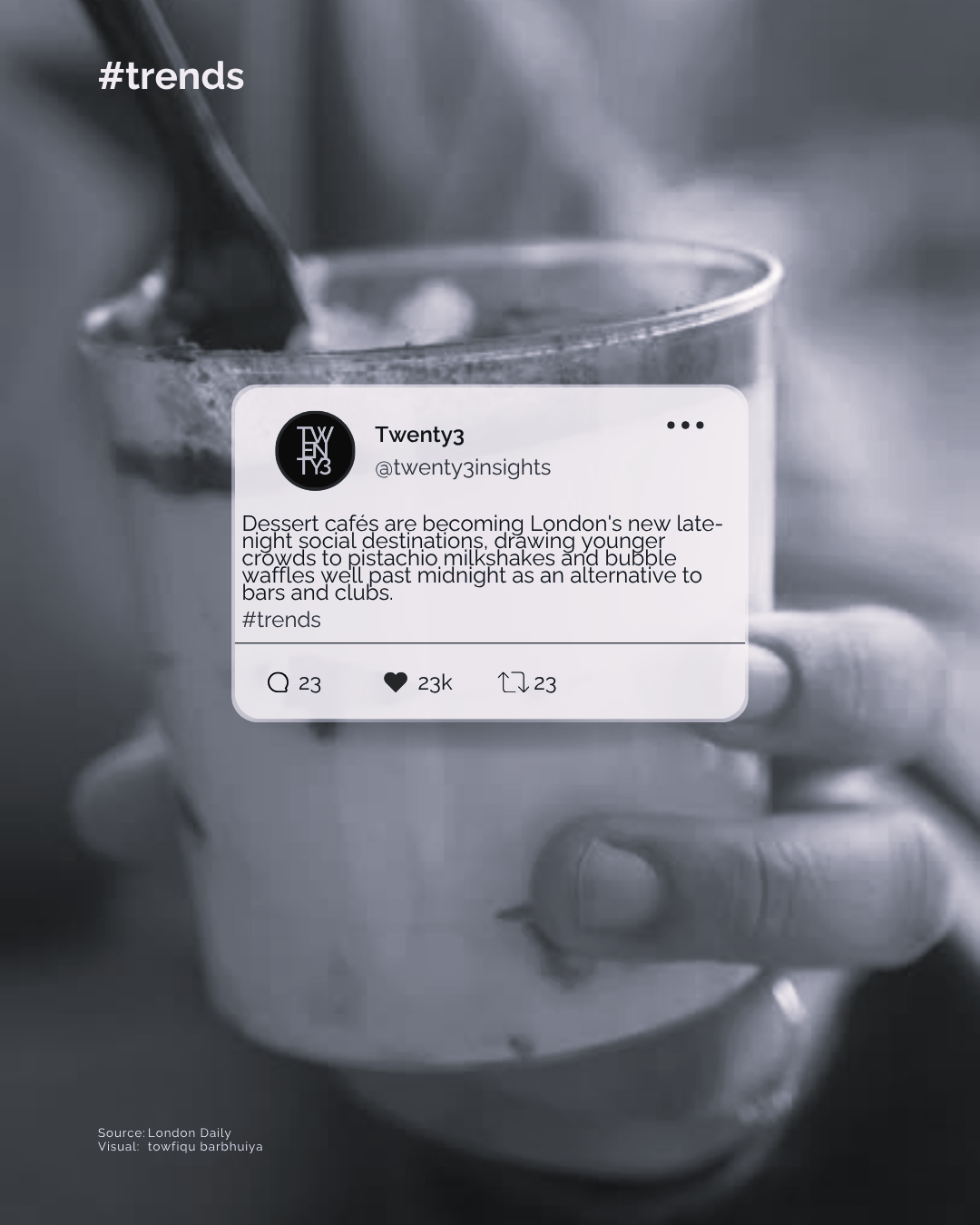
Dessert cafés are becoming London's new late-night social destinations, drawing younger crowds to pistachio milkshakes and bubble waffles well past midnight as an alternative to bars and clubs. The shift reflects Gen Z drinking less, spending more intentionally, and favouring experiences that are affordable, photogenic, and accessible to wider social groups. If sugar is replacing spirits as the social lubricant of choice, what does that mean for how hospitality brands define nightlife going forward?
Americans Are Snacking More, and More Often
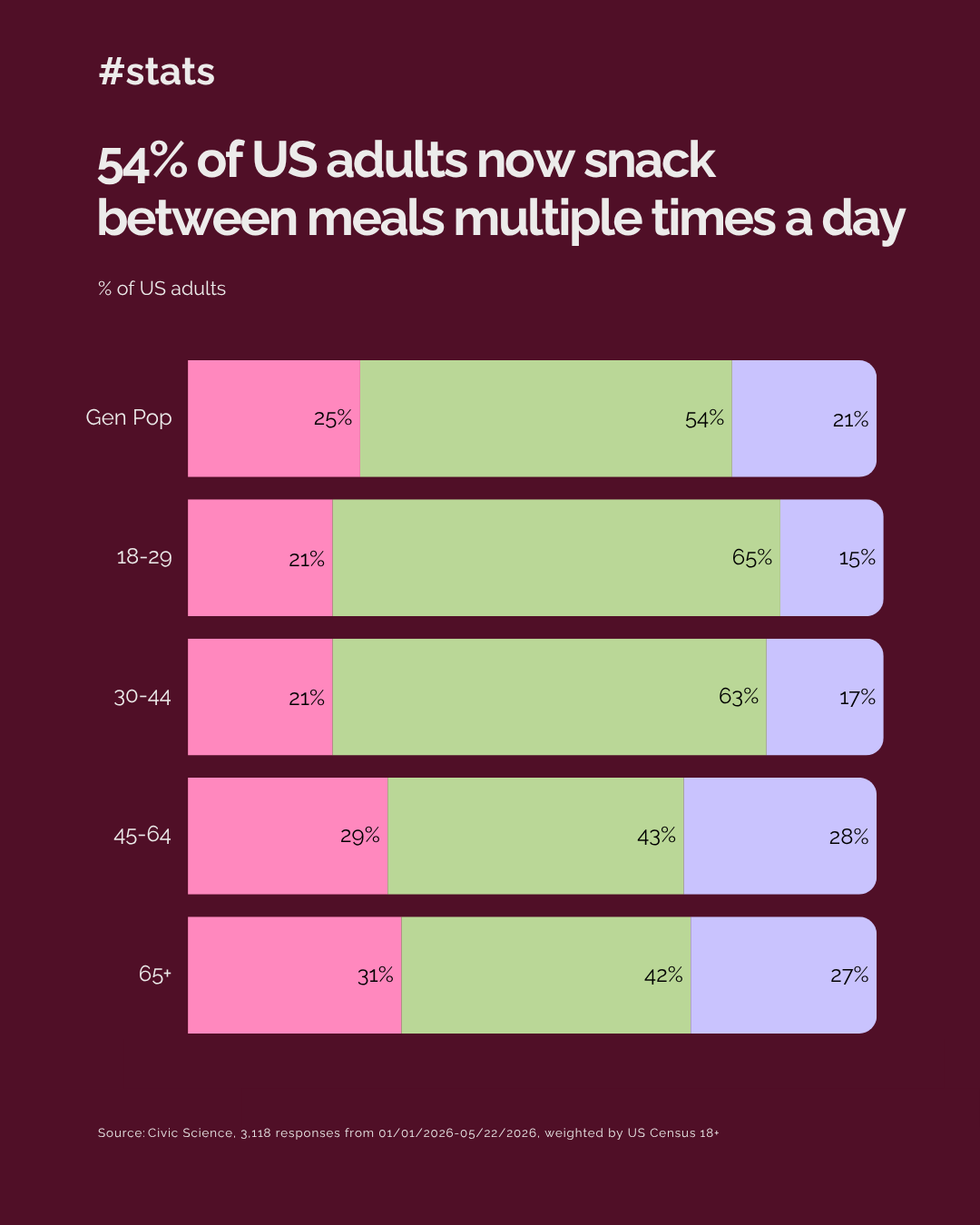
54% of US adults now snack between meals multiple times a day, the highest figure since tracking began in 2015, with nearly 6 in 10 replacing a full meal with snacks at least once a week. Appetite leads as the motivation, but convenience, cost, and health goals all feature, suggesting this is less a lapse in discipline and more a deliberate restructuring of how people eat. If snacking is becoming a primary rather than supplementary eating behaviour, how should food brands rethink what a meal actually means?
Blouge Wine Offers a Simpler Way Into Summer Drinking
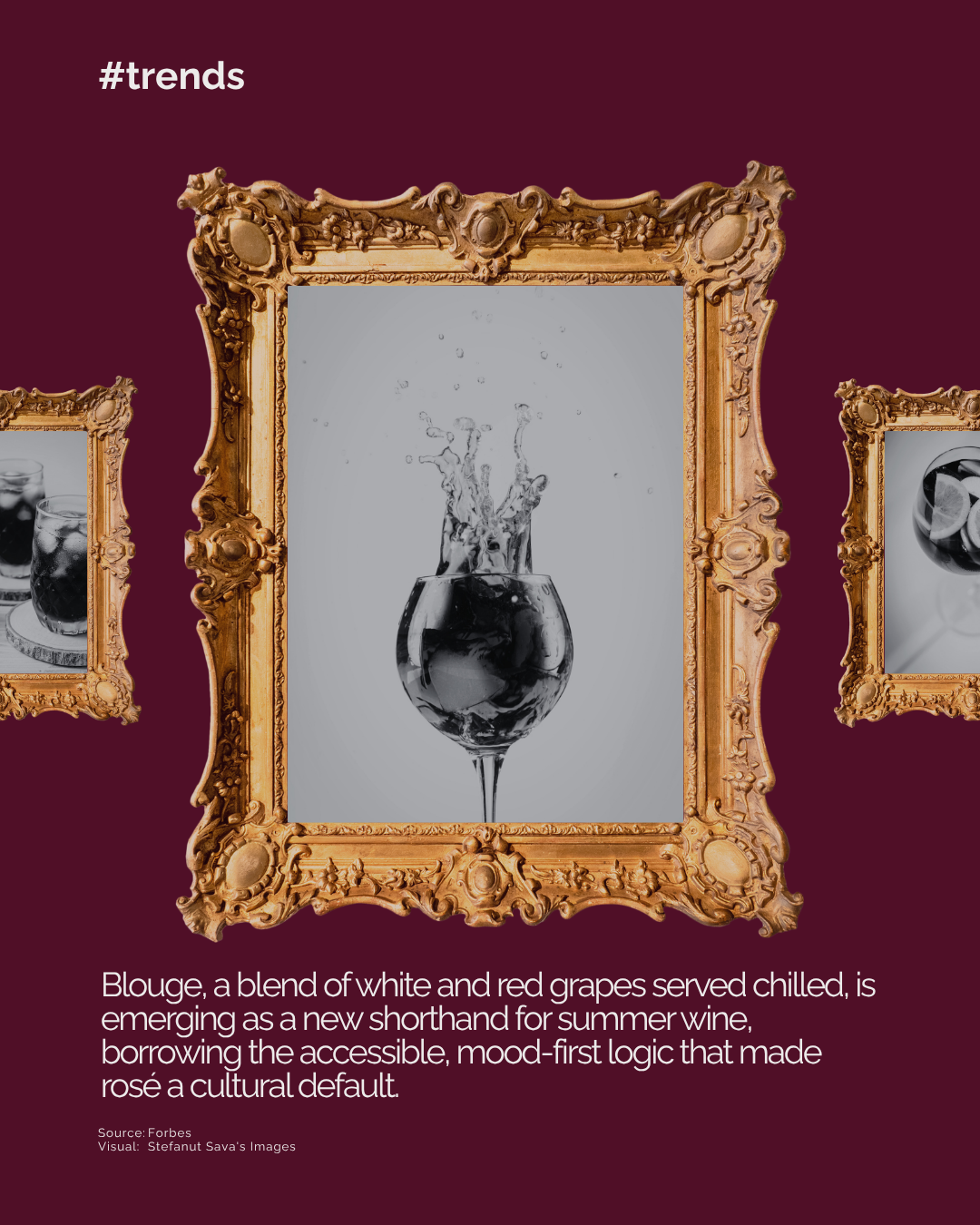
Blouge, a blend of white and red grapes served chilled, is emerging as a new shorthand for summer wine, borrowing the accessible, mood-first logic that made rosé a cultural default. It is not a formal category but a pitch: two familiar things combined into something that needs almost no explanation to sell. As wine works harder to attract younger drinkers, is a memorable name and a cold glass now doing more commercial work than the bottle's contents?
Explainer: workation
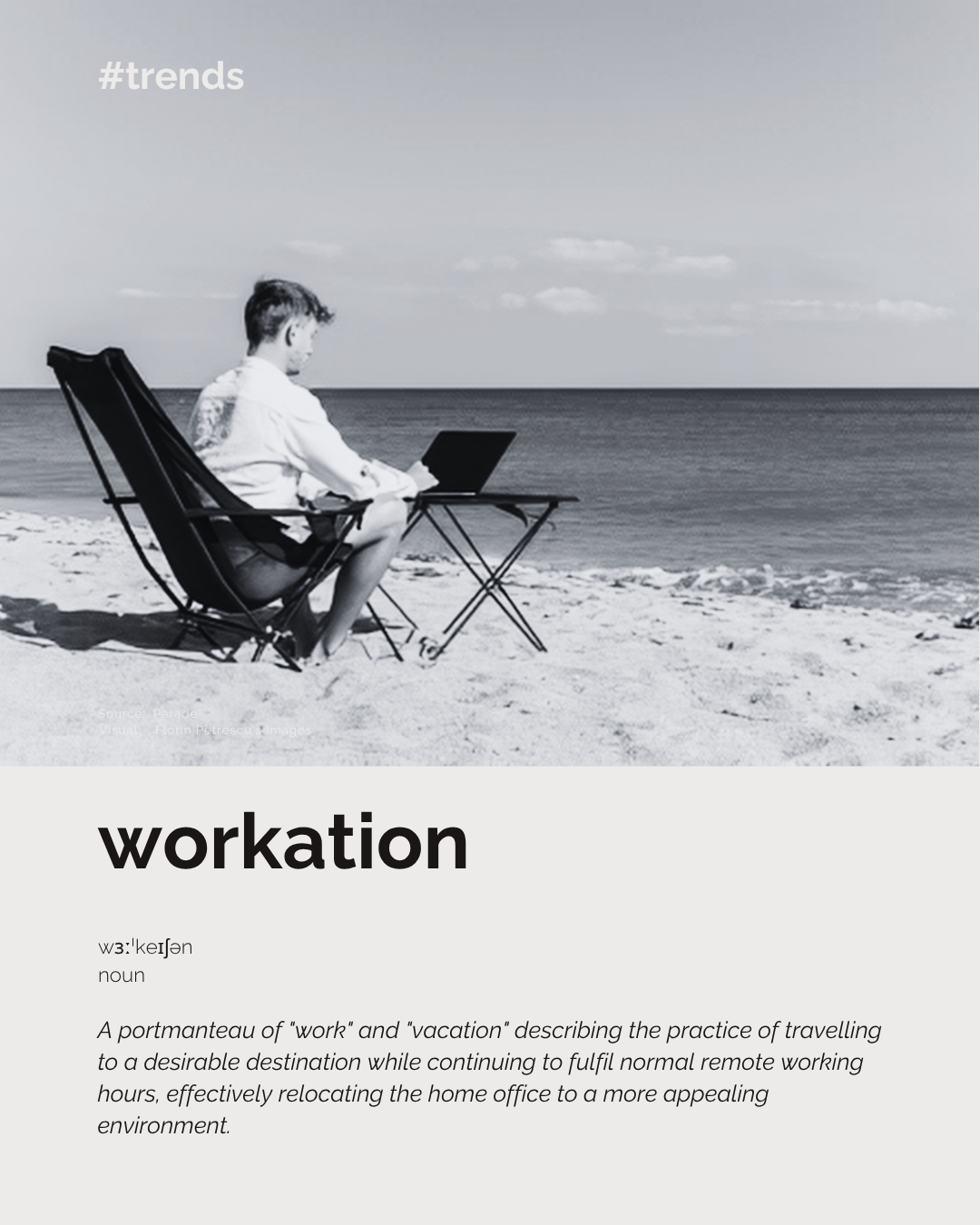
Google searches for "workations" have risen 210% in the US in the past month, with around 130,000 monthly queries, as remote workers combine full working days with holiday destinations rather than saving trips for formal leave. Over half of employees have already tried it, and more than 80% say mixing work with travel helps counter burnout. As the boundary between office and holiday continues to blur, what are the longer-term implications for how employers think about productivity, presence, and time off?
Show and Tell Is Back, and Adults Are the Audience
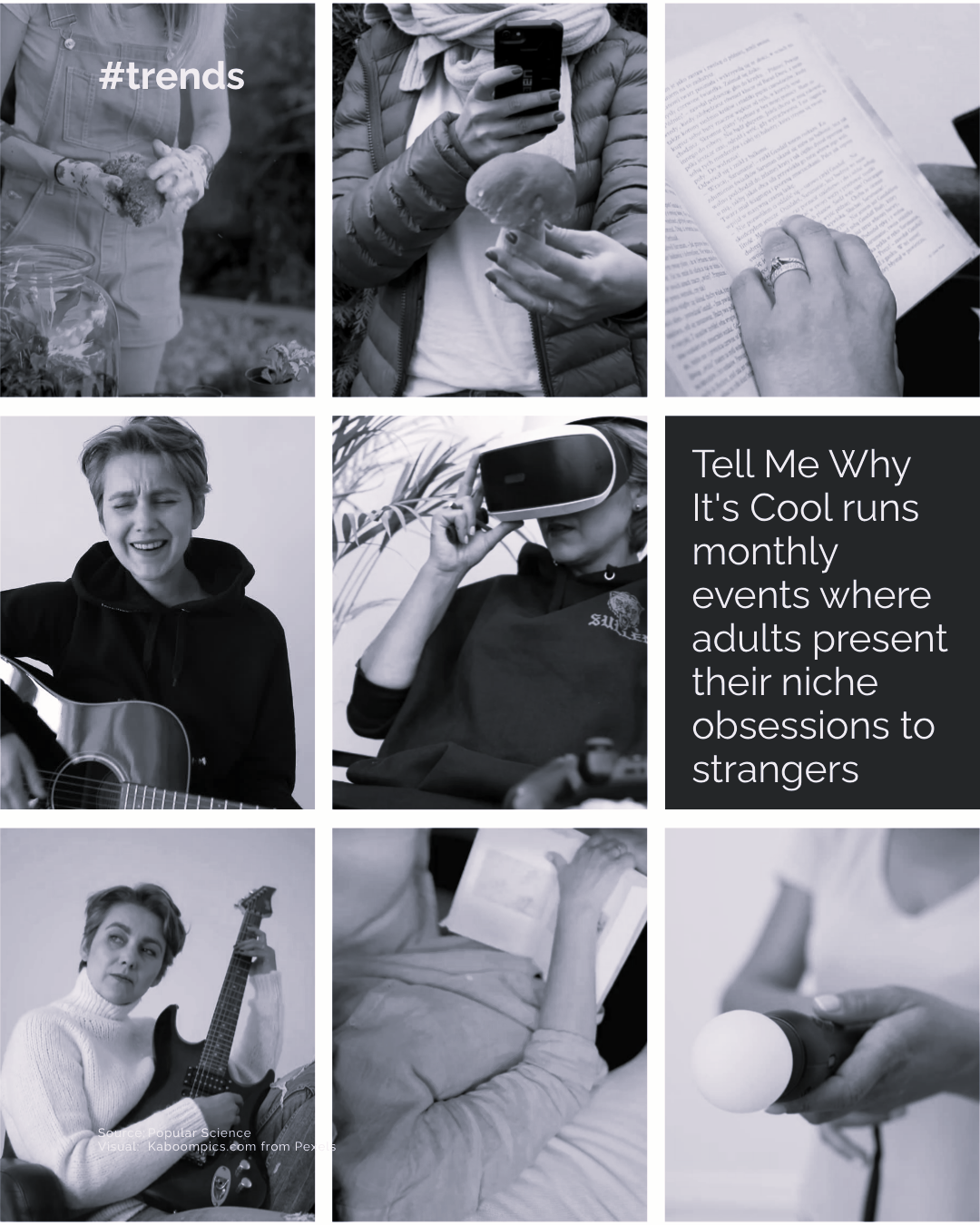
A Chicago start-up called Tell Me Why It's Cool runs monthly events where adults present their niche obsessions to strangers, covering topics from cemetery photography to forgotten Sanrio characters, with audience votes and a Q&A that turns curious listeners into regulars. The format offers what loud mixers and happy hours rarely do: a reason to talk to someone you would never otherwise meet. As people seek more intentional ways to socialise offline, what does the appetite for structured curiosity say about what we actually want from third places?