The Patterns of Micro Joy
Yesterday, the sky was that shade of grey that is typical for London: not quite threatening rain, but not offering sunshine either. My inbox has a slew of unread messages demanding replies, and my schedule looked like a game of Tetris. And yet, there were little moment of joy: casually running into my neighbour’s dog Peanut, the perfect song shuffling onto my playlist, a message from an old friend that made me smile. For just a few minutes, I felt lighter.
I've been thinking about these moments a lot lately. These tiny pockets of pleasure that punctuate our days. They're not the milestone celebrations that fill our Instagram feeds or the achievements we list on LinkedIn. They're quieter, more personal: "micro joys."

Photo by Monica Silvestre via Pexels
According to Human8's What Matters 2025 report, of the 12,500 respondents surveyed across 15 markets, 84% report it important to find little moments of joy.
When looking at this across generations, Baby Boomers are leading the charge with 87%, while Gen Z is bottom of the list with 80%. But there is a different story behind the numbers. For a generation who came of age during COVID-19, the relationship with these small pleasures feels different, more urgent, perhaps. Many of them felt their expected "big moments" disappeared overnight: graduations without ceremonies or first jobs started remotely from childhood bedrooms.

Human8 What Matters 2025 report
With those traditional milestones disrupted and financial futures uncertain, small everyday pleasures are turning into little treat culture. A good coffee isn't just a coffee when the world feels uncertain - it's a moment of normalcy to hold onto.
I wanted to understand more about how these micro joys manifest in our daily conversations, so I dug into YouScan’s social listening data.
When I looked at what people talk about online, the expected big celebrations dominated – birthdays, Mother's Day, holidays. These are what we might call "organised joy" – the scheduled happiness we've always been taught to value and document. But surrounding these bright spots were countless smaller clusters of conversation – people sharing moments with pets, describing perfect bites of food, noting the way sunlight hit their desk at just the right angle.
What struck me most was how disconnected these conversation clusters around were from each other. Unlike the big occasions and events, these micro joys are deeply personal, contextual, uniquely ours. We're finding happiness in increasingly individualised ways rather than through collective, shared experiences.

Conversation Clusters via YouScan
There's a beautiful story in the engagement data for visuals of “micro joy”: what generates the most engagement online isn't necessarily what brings us genuine joy in our lived experience. "Sleep," "play," and "baking" receive less attention than branded content. The authentic joys seem to exist in that middle range – specific enough to be meaningful but universal enough to be relatable.
In a world that celebrates achievements and constant productivity, we're rediscovering value in the small, the ordinary and in the in-between spaces.
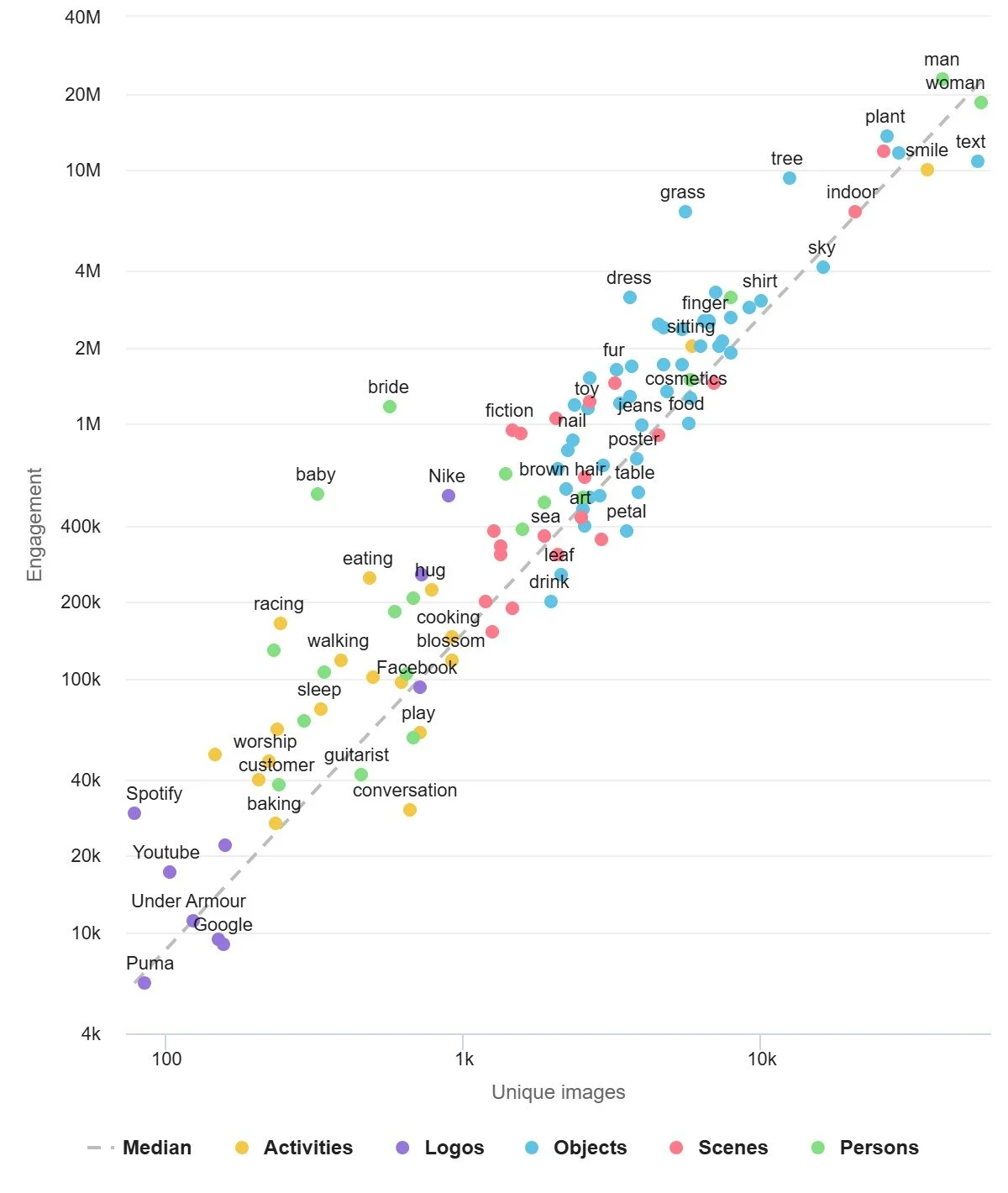
Visuals: distribution by engagement - via YouScan
It reminds me of kintsugi, the Japanese art of repairing broken pottery with gold. The philosophy behind it suggests that breakage and repair are part of the history of an object, not something to disguise. Perhaps these micro joys serve a similar function in our lives. They don't hide the cracks of difficulty or stress, but they do highlight them with something beautiful, making us appreciate its imperfection.
I've started paying more attention to my own micro joys. Not toxic positivity that denies reality, but small, genuine moments that help us move through reality with a bit more grace. They’re not solutions to life's bigger challenges, but they do make those challenges a little easier to face.