Trend Taster: quiet cracking edition
In this week’s edition of the Trend Taster, we round up the snackable trends, stats and insights from around the world, including:
Agatha Christie's AI-powered writing course
AI-generated avatars help marketplace sellers
The world’s longest train journey
Explainer: quiet cracking
The rise of "screen fatigue"
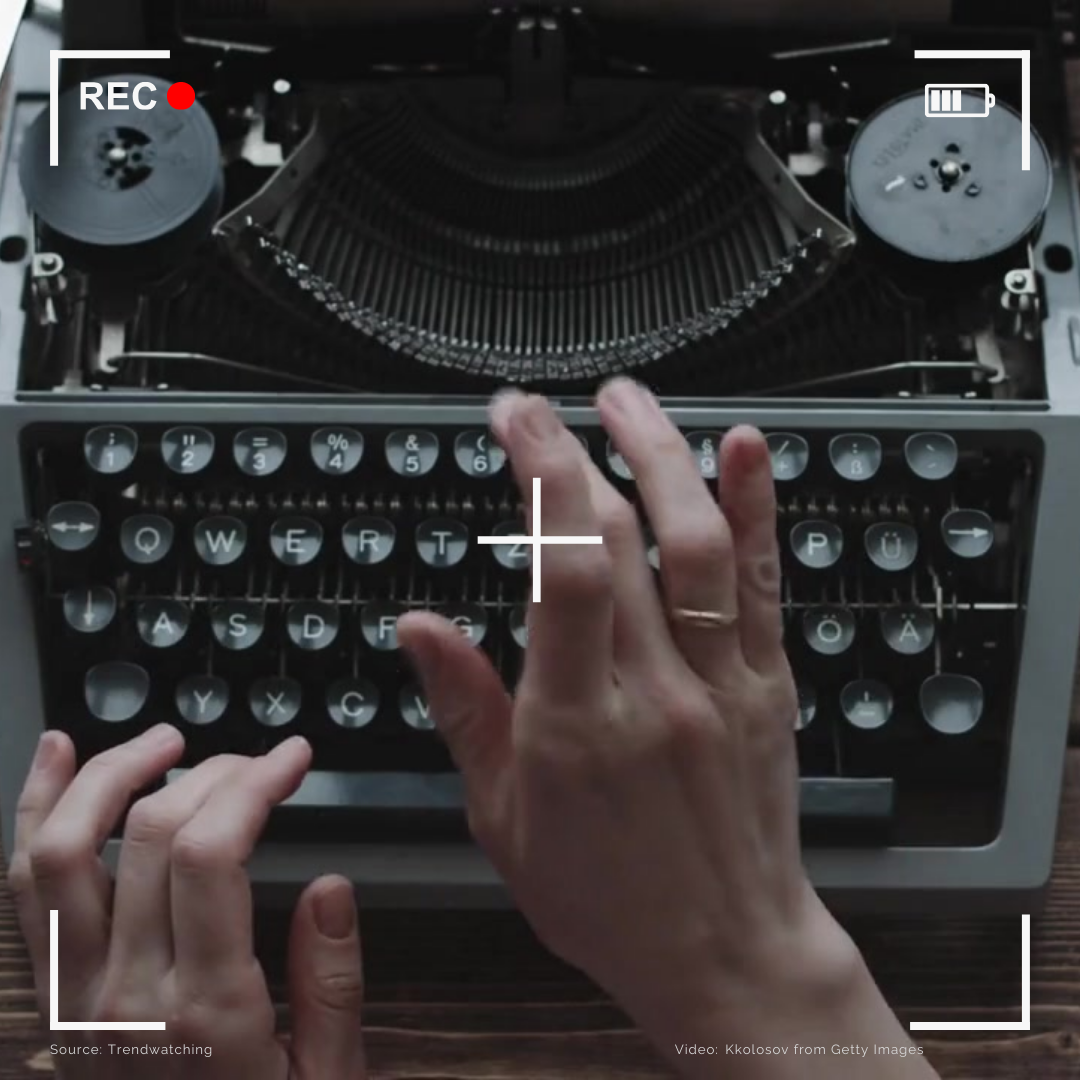
Agatha Christie's AI-powered writing course
Agatha Christie is back. Not as a gimmick, but as a guide. BBC Maestro’s new AI-powered writing course brings the queen of crime into the 21st century, letting her teach in her own words, voice and likeness and full collaboration with Christie’s estate. In an age of cloned voices and synthetic faces, audiences are growing more sensitive to how posthumous figures are handled, it’s about setting a new bar for how AI can honour legacy.

AI-generated avatars help marketplace sellers
Women on platforms like Vinted face a troubling paradox: model your clothes for better sales, but risk unwanted attention and image theft. Minimist's solution: AI-generated avatars that display clothing realistically without exposing sellers. This signals a wider shift where technology doesn't just optimise marketplaces but creates safer digital environments.

The world’s longest train journey
The world's most epic rail journey now connects Portugal to Singapore, a staggering 11,654-mile adventure crossing 13 countries and 8 time zones. Made possible by the 2021 completion of the Laos-China Railway, this theoretical two-week expedition through diverse landscapes and cultures represents the ultimate train enthusiast's dream. Yet despite its viral fame, no one has completed it, thwarted by practical challenges like suspended Russia-Europe connections, limited Trans-Mongolian tickets, and the philosophical question: is a journey requiring 20 different trains still one journey?

Explainer: quiet cracking
“Quiet cracking" emerges as the latest workplace trend. It's signalling employee distress, where workers disengage, underperform, and secretly plan their exit. TalentLMS research reveals 54% of employees experience this phenomenon to some degree, with root causes including job insecurity from inadequate training and "managerial disconnect", as 47% report their concerns go unheard. Unlike the visible exodus of the Great Resignation, this silent crisis may be equally damaging but offers a clear solution: creating growth space through learning opportunities and meaningful dialogue that helps employees rediscover purpose and momentum.

The rise of "screen fatigue"
The rise of "screen fatigue" is real. New research from Heineken shows we spend nearly 6 hours daily on devices - that's 88 days a year. Meanwhile IRL interaction has dropped 35% over the past 24 years. 64% wish for a return to pre-smartphone socializing. As digital burnout intensifies, watch for brands creating meaningful offline experiences, shifting social capital from posting to presence.