Stop Checking the Score: Why Uncertainty Is the Last Cultural Luxury
Photo by Pawel Czerwinski on Unsplash
Whenever I'm about to watch a movie, I'll hop onto IMDb to check out the cast, read the entire trivia section, maybe peek at filming locations. But before I actually commit to buying a cinema ticket, I'll find myself on Rotten Tomatoes. Fresh or rotten - that Tomatometer has become a proxy for quality, a kind of cultural insurance policy. But how much can we actually trust Rotten Tomatoes for taste anymore?
Cultural Curiosity is a reader-supported publication. To receive new posts and support my work, consider becoming a free or paid subscriber.
Two recent articles about Rotten Tomatoes explored this question from different angles. Matthew Belloni asked in Puck if Rotten Tomatoes is rigged. He draws on Hollywood insider knowledge to show how studios now strategically embargo reviews and court critics whose positive coverage can tip an early average.
Daniel Parris asked a similar question on his Substack: Is Rotten Tomatoes Still Reliable? He used statistical analysis to show that average Tomatometer scores have jumped 13% since Fandango acquired the platform in 2016. At the same time, the gap between critic and audience scores has widened significantly, which suggests something has changed in how these ratings are created.
Since 2016, Rotten Tomatoes has expanded its reviewer pool by 40 to 70 critics per mainstream release. Many of these new voices come from outlets you've probably never heard of. These aren't necessarily bad reviewers. But they're operating under very different pressures and incentives than the established film critics at major publications.
If we looked at this from a sampling perspective, we're essentially seeing a shift in who gets to be a critic and how representative that group actually is. On the audience side, we're dealing with an equally skewed sample. They are essentially a subset of moviegoers who are motivated enough to log into Rotten Tomatoes and rate or review films. This isn't a random cross-section of cinema audiences. They are self-selected, often digitally native, and not representative of cinema audiences as a whole. Both sides of the Tomatometer are shaped less by randomness than by self-selection.
The effect is a feedback loop. As critics often see films before general release, the question is how much audiences are influenced prior to watching a film by the very critical discourse they're supposedly providing an alternative to. Are audience scores actually independent measures of quality?
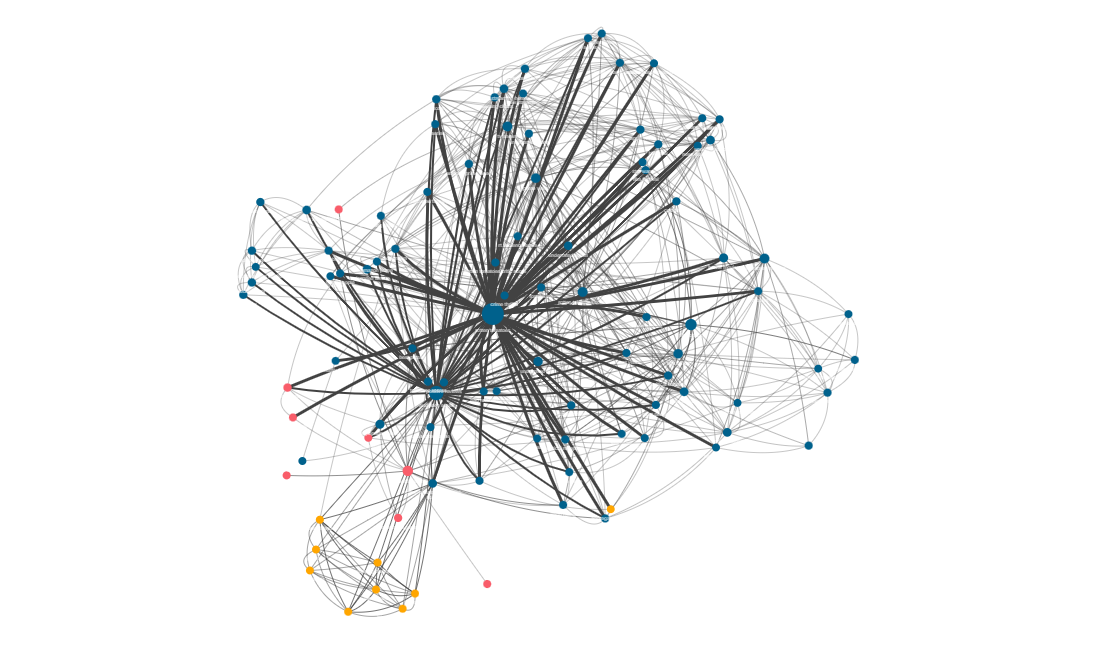
When looking at social listening data via YouScan, a conversation cluster map shows a tension between professional critics and the general audience. The discussion is heavily anchored to rating platforms like Rotten Tomatoes and Metacritic, with a clear debate about whether the "audience score" or the "critic score" holds more weight. Beyond this, the map also shows that a significant portion of the conversation is driven by personal subjectivity, with frequent use of terms like "underrated movies", "unpopular opinion", and "overrated movies". This indicates that a large part of the online discussion is less about a film's objective quality and more about challenging mainstream views and validating individual taste.
This pattern isn't unique to film reviews. Google Reviews has changed local dining from neighbourhood discovery into algorithmic validation. Goodreads ratings have become as crucial to book sales as actual literary merit. Dating apps have turned romantic compatibility into a series of metrics that can be optimised and gamified.
Cultural preferences that once developed through lived experience, community discussion, and personal trial and error now crystallise online before we've even encountered the thing we're judging. The opinion precedes the experience.
Cultural strategist Julia Makhalova-Chi makes this point in her Substack "How Vinyl has Become the Only Non-Social Music Experience in the Post-TikTok World". 80% of Gen Z now discover music through TikTok. 66% spend more time watching content that discusses something than experiencing the thing itself. So our cultural preferences are being shaped by discussions online before we even have a change to form our own opinions. The vinyl resurgence works exactly because it resists; you must listen before you can compare notes.
This matters because it changes how cultural risk gets distributed. In the past, traditional gatekeepers, critics, editors, absorbed cultural disappointment on our behalf. They endured mediocrity so we didn't have to. Today, platforms democratise participation but amplify the loudest, most digitally engaged voices. Tastemakers are those who are most algorithmically fluent. The result is a taste mismatch, because these platforms favour engagement over accuracy, consensus over insight.
Has Rotten Tomatoes become unreliable? Is it rigged? Or have we just lost our appetite for the uncertainty that makes discovery possible? When we check that score before buying the ticket, we're not just looking for information. We're seeking reassurance that our choices won't disappoint us. But disappointment, it turns out, might be exactly what we need more of.
Every time we prioritise comfort over curiosity, we're adding to a cultural landscape that serves our anxiety rather than our growth. The data suggests we've built exactly the cultural evaluation system we asked for. The challenge now is whether we're brave enough to want something better.