How Mystery Boxes Fuel the Serendipity Economy
I watched my friend Becky squeal with delight, as she unwrapped a small plastic figurine with sharp teeth and an unsettling grin. Her joy wasn't the result of getting exactly what she wanted. It was precisely because she didn’t know what she was getting. This moment crystallised something I’d seen all across my socials as well: mystery boxes. And we're increasingly paying premium prices for the joy of not knowing.
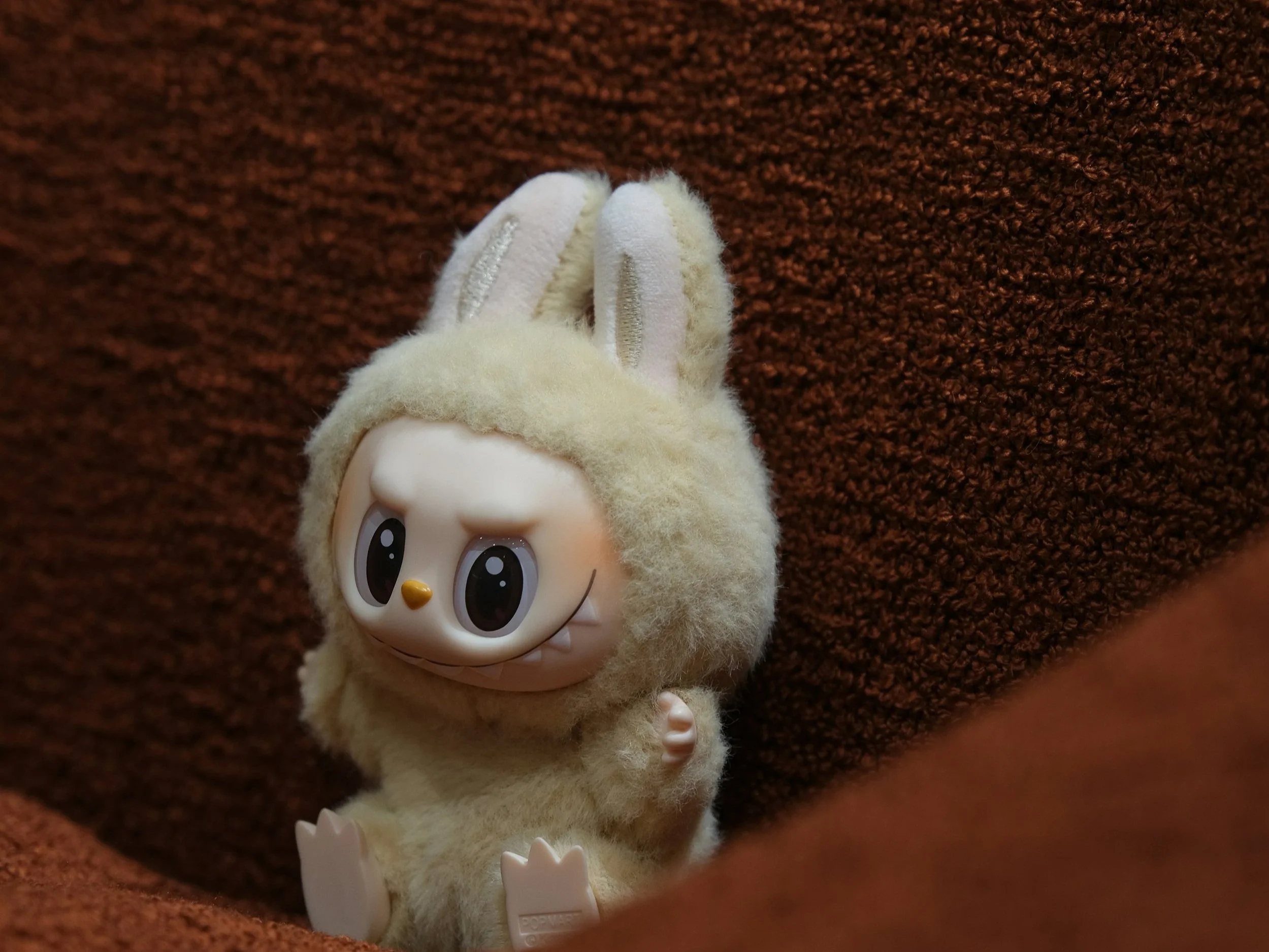
Photo by David Kristianto on Unsplash
The mystery boxes market, from Pop Mart's Labubu dolls to luxury fashion blind boxes, has exploded. In the UK alone, the collectibles sector is valued at £510 million, with adults now accounting for over 60% of toy sales. But this isn't really about toys. It's about something far more fundamental in our relationship with consumption and chance.
You could see it as just a modern twist on age-old rituals: lucky draws, fortune cookies, grab bags, gashapon, and even tarot cards. Humans have always been drawn to the mystical thrill of chance. What’s changed is the scale, speed, and commercialization of that dynamic.
Mystery boxes are driven by emotional rather than rational decision-making: people actively choose to spend money without knowing what they'll receive. What does this tell us about evolving consumer behaviour?
One answer lies in our neurochemistry. We're not just purchasing products here. We're buying emotional rollercoasters. The anticipation builds until the moment of revelation. That moment of unwrapping, of pure possibility before revelation - that's a dopamine goldmine. Mystery boxes deliver micro-doses of hope. They momentarily give consumers a sense of agency (“I might get the rare one!”) in a world that often feels uncontrollable. It's the digital equivalent of our childhood Christmas mornings, bottled and sold back to us as adults. They also allow for safe emotional projection: people bond with toys, assign them meaning, or use them to express identity.
This leads to startling statistics: the repurchase rate for blind boxes can reach 58%. Some dedicated collectors spend upwards of £3,000 annually pursuing complete sets. The secondary market thrives as well, with rare items selling for 39 times their original price.
What began with toys has rapidly expanded across industries. Luxury brands like Lanvin have experimented with high-end blind boxes, offering the chance to receive silk scarves, sneakers or handbags for a fixed entry fee. Their initiative attracted 50,000 players within a month – five times their average engagement.
For brands that want to jump on the mystery box bandwagon, the lesson isn't simply "add mystery." Brands that thrive in this space understand the underlying drivers: consumers are craving experiences. They want stories, emotions, surprises; moments that feel special and full of possibilities.
It’s no coincidence that mystery boxes are thriving at a time when so much of life feels over-determined. Algorithms predict our choices before we've fully formed them. Targeted advertising promises perfect matches, nudges by data. But with a mystery box we’re suddenly gravitating toward unpredictability. It's as if we're looking for an escape from too much certainty.
The mystery box economy also reveals our relationship with disappointment. The awkward truth here is that most blind box purchases result in very average items. Many buyers end up with duplicates or common variants rather than the coveted rare editions. Yet this disappointment doesn't deter consumers. It fuels them. The near-miss psychology that powers gambling is at work here too, creating the belief that the next box could be THE ONE.
Mystery boxes are walking a fine line between delight and addiction. What make these boxes so compelling – randomised rewards and the thrill of the chase – are the same psychological triggers that make gambling problematic.
To understand what mystery boxes mean to consumers beyond the dopamine hit, I looked at YouScan social listening data, using a network map of social media conversations around this trend. Think of this map as a constellation of online posts and mentions: each dot (or node) represents a person or post, and the lines connecting them represent shared language, themes or interactions. Clusters form where people are talking about similar things in similar ways.
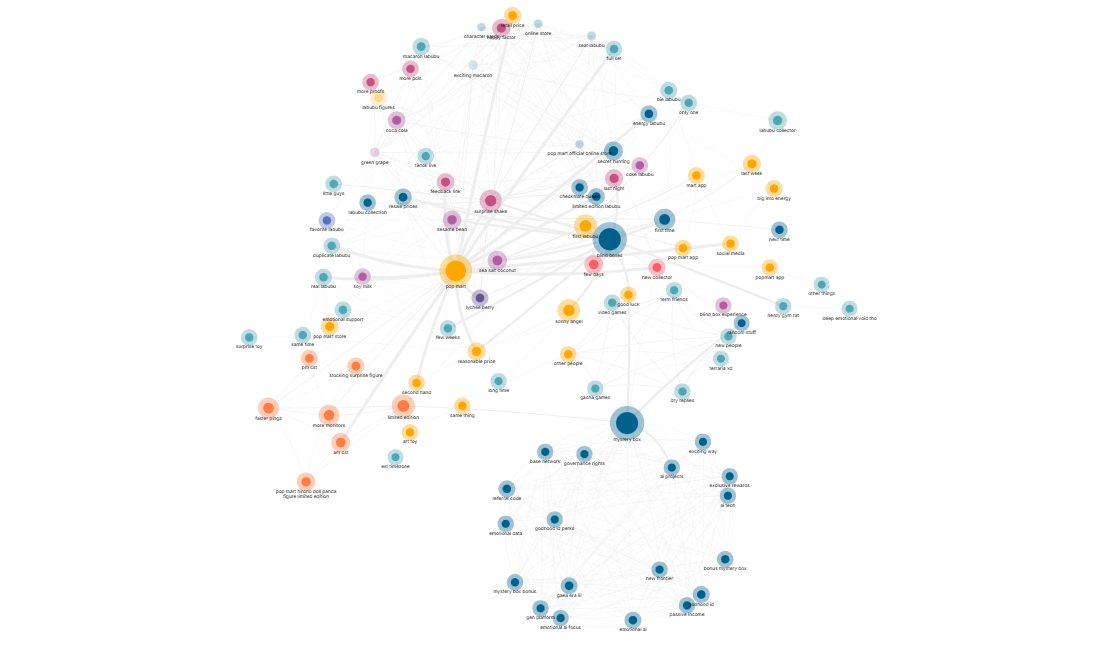
YouScan Network Map
At the heart of the map sits a dense, interconnected group: mostly fans, collectors and influencers. These are the people driving the conversation. They use insider language: “chase figures”, “unboxing hauls”, “pull ratios”. Their posts are rich with emotional highs and lows, celebration and frustration. This is the engine room of the mystery box economy: a committed community that blends hobbyism with identity. For these consumers, the box isn’t just a product, it’s part of a ritualised social experience.
Surrounding the core are smaller clusters made up of brand-driven posts, product drops and influencer collaborations. These are less conversational and more promotional. Here we see fashion and beauty brands experimenting with the mystery format, often to boost engagement or gamify loyalty. Here, the mystery box format is being adopted as a way to inject emotion into digital commerce.
Another cluster features consumers telling personal stories: childhood nostalgia, “my first mystery box”, gifting moments. This group is less technical and more emotional. The joy here is not in collecting per se, but in the narrative power of surprise. Here, mystery boxes tap into a universal love of story, memory and meaning-making.
Along the edge of the network is a looser, more sceptical group. These are mostly journalists, psychologists and the occasional consumers reflecting on the ethics of blind boxes. Words like “manipulative”, “wasteful”, and “addictive” pop up. While they’re not the loudest voices, they offer a moral counterweight and act a reminder of the thin line between thrill and addiction.
Finally, a floating cluster of humour and satire emerges. They often poke fun at blind box obsession, failed pulls or collector frustration. These posts are less about products and more about social commentary. They act as release valves, letting people laugh at the hype cycle even as they participate in it. This memefication signals where enthusiasm turns to fatigue.
There is very little conversation about the emotional aftermath of mystery boxes. The fleeting highs of opening a box can be swiftly followed by post-purchase emptiness and regret – and loads of clutter. Over time, consumers may begin to crave meaningful purchases rather than randomised consumerism.
Perhaps the most valuable insight this trend offers is that in a world obsessed with precision targeting and frictionless experiences, we’re still hungry for serendipity.